Monday, April 24, 2023

Scotland's music: Breabach celebrates nature and hope with Fàs

Fàs: in Gaelic, it is word that means growth, developing, and sprouting.

It is also the name Breabach have chosen for their recent album. Both musically and in outlook, those ideas are good descriptions for what they’ve been exploring

The music most often holds connection to the natural world and ideas of change. That parallels a bit what is going on with Breabach’s musical evolution, too: staying true to their love of and expertise with tradition, they continue to take tradition forward and add to it in thoughtful and creative ways.

The five members of Breabach are well qualified to do this individually. One of the fine things about listening to the tracks on Fàs (and seeing the band live, too, which you need to do if ever you have the opportunity) is enjoying their excellence at collaboration, too.

Breabach are Calum MacCrimmon on Highland pipes, whistles, bouzouki, vocals; James Lindsay on double bass, Moog, vocals; Ewan Robertson, who plays acoustic and electric guitar in addition to singing; Megan Henderson on fiddle and vocals, and newest member of the band (this is his first time recording with the group) Conal McDonagh, on Highland pipes, uilleann pipes, whistles, and vocals.

The ten tracks on Fàs find the band offering a fine mix of trad and original music, with song in both English and Gaelic, balanced with a good range of tunes as well.

The opening set, The Old Collection, holds three traditional tunes along with one composed by Calum. It offers good introduction to the band’s way with honoring tradition as well as adding their own spark. That’s lightly done, adding just a t touch of something a bit different to the band’s imaginative work.

Part of that spark comes out now and then through touches of synth from guest Keir Long and percussion from Inge Thomson, too -- just enough to add in to mix at times. Thomson produced the album, and given her fine ear for connection electronic and acoustic elements in her other work, it’s no surprise she does it well here.

Ewan Roberson wrote and takes lead voice on Revolutions. which he remarks was inspired by reading about renewable energy and making a visit to a wind farm. “A love song to a wind turbine,” he calls it. It is that, and there’s more thoughtful stuff going on in its lyrics, too and in the video the band has made to go along as well.

Megan takes lead for the Gaelic song Eadar An Dà Bhraigh, written by her brother Ewen Henderson. It’s to celebrate the sustaining of a woodland ecosystem just south of the Cairngorms. That might not at first sound a likely subject for a lovely song, but in the writing of Ewen and the voices and instruments of Breabach, it becomes just that.

Another favorite is the set Brog to the Future, which comprises three tunes celebrating the promises of nature and of the coming generations. There’s one from Cape Breton fiddle player Kinnon Beaton, one from Megan, and one from Conal, to make a lively and engaging set.

Megan composed the title tune after taking part in a Fridays for Future march with Ewan and their young daughter at the COP26 climate meeting in Glasgow. Brog means shoe in Gaelic, and Conal’s tune also has to do with shoes, while Kinnon’s is a reel for a school graduating class. Steps to the future, perhaps.

Another excellent set is Dear Green, with tunes composed by Megan in honor of Glasgow and its green spaces, and by James in honor of the Global Seed Vault in Norway, which also provides hope for future. Not subjects every musician would choose or would be able to bring off, but these two, along with other band members and guests Long and Thomson, do it with class.

Class is a fair description all that’s going on in Fàs, There’s the title track, which brings together trad and contemporary in good style, Megan’s fine singing in a song sourced frm Cape Breton, a cover of a Jim Malcolm/John McLellan piece, and a march from Calum.

To draw the album to a close and to draw the threads of ideas of nature and future together, Breabach offer song from Calum -- he takes lead voice, too -- called Changing World. This thoughtful and thought provoking piece was inspired by Calum’s reflections during lockdown, looking out his window and seeing natuee flourishing in the absence of human activity.

Fàs is an album weLl worth the listening, worth repeated listening. Every time you do so you will hear new colors, voices, and ideas. It is a great next step for the top class musicians of Breabach.

...and in case you were wondering about sustainability, the disc comes in a sleeve of FSC certified stock, printed using all vegetable inks.

You may also wish to see
Another album from Breabach, Frenzy of the Meeting
A video of the title track is part of this story at Wandering Educators Music for the new year: possibilities of hope
A look back at one of Inge Thomson’s concerts at Celtic Connections
Another recording that celebrates nature, The Woods from Hamish Napier

--> Your support for Music Road is welcome and needed. If you are able to chip in, here is a way to do that, through PayPal. Note that you do not have to have a PayPal account to do this. Thank you.

You can also Buy Me a Coffee at ko-fi.com

Labels: , , , , ,

Bookmark and Share
posted by Kerry Dexter at 0 Comments

Thursday, December 01, 2022

Berry Song

At the edge of a wild wide sea, up in the far north, a young girl is learning from her grandmother -- learning about how to live on and with the land. Learning about how to respect the land and the plants and animals with whom we share space.

That is the underlying story of illustrator and author Michaela Goade’s book Berry Song.

The berries in the title come on for exploration and discovery as part of this.

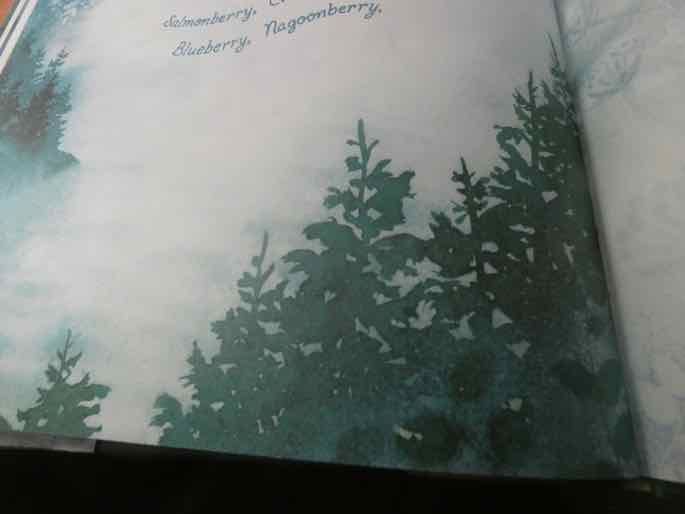
“Salmonberry, cloudberry, blueberry, nagoonberry...” and other sorts of berries are named several times in a recurring way that brings out the rhythms of Goode’s story.

Illustrations of the berries, of the forests in which they grow, of the edges of that wild wide sea, carry the story too. It is a story which includes bringing those berries home and making food to share with family and friends.

That aspect of sharing aligns too with the ideas of connection to forest, shoreline, sea, night sky. The gentle yet firm and songlike way elders share respect for the land and the way that younger generation folk come to know it is right to past this knowledge along are present, too.

This a picture book, to be sure, a short book which young children and early readers will enjoy. Adults and older siblings could have fun sharing it with those younger ones, as well.

Berry Song is not just for children, though. Goade’s illustrations are thoughtful, beautiful and engaging. They offer as much to contemplate as do Goode’s words; together they are even more powerful.

In notes at the end of the book, Goade shares some of her story of having grown up at the edge of the wild wide sea in Alaska. That story continues: She still lives in Sitka, and is a member of the Tlingit people.

“All year long I excitedly wait for berry season, for the juicy salmonberries that strum the first notes of berry song, and the cranberries after the first freeze that signal its end,” Goade writes. “Every time I wander back into the forest, I am a little kid again, spellbound by the magic and joy of the berry song.”

Magic and joy come through clearly in both word and art in Berry Song.

There is inspiration in those end notes, too, as Goade offers ideas on ways to take some of the themes of Berry Song into action.

Speak to the land, take care of the land, we are part of the land are the lessons Goode offers ideas about in this section. Learn names of the berries, take only what you need, work to respect wild lands are but three ideas you will find here. There is also the chance to learn a few words in Tlingit language.

Berry Song is a picture book for young readers, to be sure. It holds words, illustrations, and ideas that young children, their older siblings, and adults of all ages will enjoy as well.

You may also wish to see
Music, nature, art, mystery, poetry: Spell Songs II: Let the Light In
Another children’s book not for children only: Build a House from musician Rhiannon Giddens,
Music inspired by the Cairngorms forest in Scotland: The Woods from Hamish Napier

-->Music Road is reader supported . Your support for Music Road is welcome and needed. If you are able to chip in, here is a way to do that, through PayPal. Note that you do not have to have a PayPal account to do this. Thank you.

Another way to support: you could Buy Me a Coffee at ko-fi.com

If you enjoy what you are reading here, check out my newsletter at Substack for more stories about music, the people who make it and the places which inspire it.

Labels: , , , , , , , ,

Bookmark and Share
posted by Kerry Dexter at 0 Comments

Saturday, April 09, 2022

Spell Songs II: Let the Light In

The drift of a leaf in autumn wind, the flutter of a moth's wings as evening fades to night. The half glimpsed movement of an animal just out of view, the call of a jay, the swirl of swifts against the sky -- these connections with nature frame our days.

Even if you have always lived in cities, you know and feel some of these things, don’t you?

Reflection on the varied connections between humankind and nature, and the ways those are changing, are part of what inspired the music of the album Spell Songs II: Let the Light In.

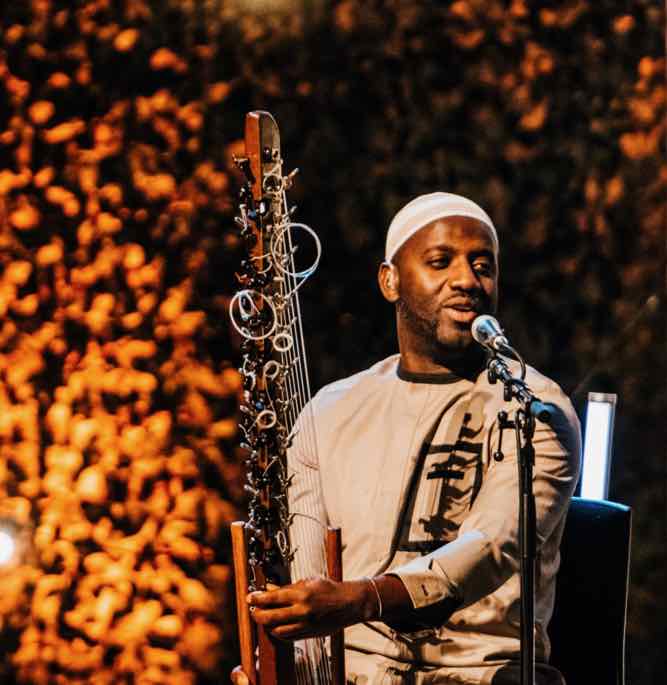
It is the second album from the group which has become known as the Spell Songs Singers: Jim Molyneux, Kris Drever, Beth Porter, Julie Fowlis, Rachel Newton, Seckou Keita, and Karine Polwart.

The musicians in turn drew inspiration from the art of Jackie Morris and the words of Robert Macfarlane. We’ll get to a bit of background on how that came about. First, though, consider what the musicians create on Spell Songs ii.

There are fifteen songs on the album, with each musician taking a turn or two at lead voice, and working in creative collaboration with harmony and instrument through the others.

They each play as well and sing -- Porter on cello, Molyneux on keyboards, Drever and Powart on guitar, Keita on kora, Newton on harp, Fowlis on whistles. Those are their main instruments, though each often takes out othersas well, Fowlis taking up the oboe, for instance, Newton moving over to fiddle, Polwat picking up bass.

That may begin to give you ideas of the musical complexity on offer; it is complexity in service of creativity, though. That comes through in the singing, and in the writing that formed the words and music.

Some songs come directly from Macfarlane’s poetry, others go in directions sparked by his words and Morris’s art onto different paths. Each of the artists is rooted in music which respects tradition, be that tradition of England, Scotland, or Senegal. Each of those traditions meet at points along the way in the music of Spell Songs II.

Polwart begins the journey taking lead on the slightly spooky Bramble. Nature is not always kind and often mysterious, an idea that continues as Fowlis follows with the haunting song Saint Kilda Wren, in Gaelic.

In Oak, Drever offers stories of the long lived tree, living its life for centuries as human cone and go, and connect with its wood for “the wheel that makes the seasons turn/the the beasts that shelter in the barn/the table that we sing around/ the casket we put in the ground,” and in many other ways. There is dimension from a verse from Keita’s sung in Mandinka, and from the other singers adding backing harmonies.

In each of these tracks and all others on the recording, the musician singing lead gives his or her own character to anchor the song. Spell Songs is very much a band project, though, in creation and in execution, as each musician’s work is supported and enhanced by contributions from the others.

That is true for each of the songs. One especially good place to hear it is in the song Swifts. Rachel Newton’s voice soars and swirls as do the named birds, while Drever adds second lead voice and each of the others contributes as well.

Seckou Keita brings a bluesy call and response idea to the presence of a familiar bird in Jay. Beth Porter’s lively take in the song Daisy readily evokes daisy chains and “tiny suns turned skyward,” while Jim Molyneux offers wistful, bittersweet melody and words to evoke the coming and going of swallows.

There are more such gems on the recording -- each of the songs is well worth repeated listening, in fact.

Plant life comes in for more musical discussion as Porter reflects on pushing one’s way through tangled gorse, and through challenges.

Fowlis takes lead on on the wintery, eerie Bird of the Blizzard, which evokes snow, ice, and change, and reminds that nature is facing change, some of it devastating.

Polwart gives another view of nature with the song Thrift, in which persistence of the seashore plant is a reminder to dig in and hang on as hardships arise.

That idea of nature dealing with change faces the fox, lead actor as Kris Drever sings Red Is Your Art. Working and living just as the margins of human life and the natural word change these days, the fox poses the question, when I am gone, when I am driven out, will you think it was worth it?

That is an idea that frames creativity here. As Fowlis sings in Bird of the Blizzard, there’s “a map made of wonder, that tracks what is fading” and “memory’s keeper is you.”

That is a idea that resonates with the fox’s query in Red Is Your Art, the persistence in Gorse and Thrift, the long lasting Oak.

It turns up as well as the thoughts Julie, Karine, and Seckou offer in Barn Owl, as they intertwine words in in Gaelic, Scots, and Mandinka on the themes of, as Karine sings it “Tak nae mair nor ye need (take no more than you need).” As indeed owls flying by night do in their travels.

In differing ways Moth, with Karine in lead, and Curlew from Rachel both honour and suggest change in nature and in our own lives, and in ways direct and indirect, the persistence of hope as well.

Fowlis takes lead on the closer, a song called Silver Birch, which draws together ideas from this recording and references a bit to the first Spell Songs album, as well.

Snow is falling, my silver-seeker;
soon the path will be lost to sight,
soon the day the day will give way

Fowlis sings. Later, though, she continues

The sun is rising, my silver-seeker

warms the pines, and breathes the larches
...Soon the blackbird will take her flight.

As promised, a bit more background to the Spell Songs projects and how they came to be:

Several years back, artist Jackie Morris learned that a number of words. most to do with nature, were to be dropped from a popular children’s dictionary where she lived in the UK. She decided to create a book of paintings that would honour these words and the nature they represented. She contacted nature writer Robert Macfarlane to see if he’d write an introduction for such a book. He came back withe idea, What if I wrote poems to go along with the paintings, spells to call words and nature back, so to speak?

The book the Lost Spells was born. Eventually presenters at the Folk by the Oak Festival in England had the idea to bring together artists they knew had an interest in nature to create music based on these ideas. The first Spell Songs album came to be. Later Morris and Macfarlane collaborated on a second book, called The Lost Spells. and so, a second album, Spell Songs II:Let the LIght In, came about. Morris, by the way, often joins the singers on stage, creating paintings live as they sing.

Photographs of the Spell Songs artists in performance at the Glasgow Royal Concert Hall during Celtic Connections by Gaelle Beri, courtesy of Innes Campbell Communications.

You may also wish to see.
Learn about the first Spell Songs recording,
About the second book from Morris and Macfarlane, The Lost Spells
Laws of Motion from Karine Polwart
Alterum fromJulie Fowlis

--> Your support for Music Road is welcome and needed. If you are able to chip in, here is a way to do that, through PayPal. Note that you do not have to have a PayPal account to do this. Thank you.

Another way to support: you could Buy Me a Coffee at ko-fi.com

If you enjoy what you are reading here, check out my newsletter at Substack for more stories about music, the people who make it and the places which inspire it.

Labels: , , , , , , , , , ,

Bookmark and Share
posted by Kerry Dexter at 0 Comments

Tuesday, December 01, 2020

The Lost Spells book: images, stories, magic...

Words, images, music: they are all things in and of themselves. They also are -- or can be -- gateways, doorways, thresholds, pathways, and means of connection.

As a visual artist, Jackie Morris knows this. When she heard certain words were going to be taken out of a popular children’s dictionary, she decided to create a book of a series of illustrations calling the words and the animals and plants they represented back into our lives.

She asked author Robert Macfarlane if he’d write an introduction to a book of such illustrations. He came back with another idea. What if he wrote poems to go along, spells or charms if you will...

The result of their exchange became the book The Lost Words. Eventually, sparked by ideas and support from the people of the Folk by the Oak Festival, a collaboration of musicians, a series of concerts, and a recording came about, too: The Lost Words: Spell Songs.

I’ve told you parts of this elsewhere here at Music Road.

Now, there’s more to the story.

First, there’s another book, again a collaboration between Morris and Macfarlane.

It’s called The Lost Spells. Some of the stories continue on with characters you met in The Lost Words (each book stands quite well on its own, though) and some are new.

Word and image mix, as they do in the The Lost Words, but then again, in not quite the same way.

The Lost Words is an oversized book, certainly great for sharing and exploring with others -- children for example; it is used quite a bit in schools. The narrative structure of the illustrations is both intricate and direct.

The Lost Spells is, by contrast, a small book, one you can easily hold in your hand and readily keep in your bag. You can, indeed share the illustrations with others, including children. It will likely be more of a sitting shoulder to shoulder or cuddling up on the couch, though, things that the bigger book does not invite in quite the same way.

Okay, you are saying, but what’s in the book? What is it about?

It is about the wild right next to you. The community of jackdaws and jays, the lives of gorse and moths, the sharp energy of the gannet, the elusive yet engaging presence of the red fox, which are all nearby but often out of mind and perhaps just on the edge of sight.

If you have been feeling a bit cooped up of late, The Lost Spells will help expand your horizons. If you have been out for walks near or far, the images and ideas may expand what you look for and how you take note of those things, too.

The Lost Spells is a thoughtful and thought provoking book, good for readers of any age. In fact its companion The Lost Words has been used in primary schools as well as in care comes for elders.

There are extensive online resources for The Lost Spells, too, good for educators, home schoolers and curious independent leaners.

Word comes, too, that the musicians who collaborated to create The Lost Worlds Spell Songs recording are beginning to work on songs inspired by The Lost Spells. They are Scottish musicians Julie Fowlis, Karine Polwart, Rachel Newton, and Kris Drever, kora master Seckou Keita, stringed instrumentalist Beth Porter, multi-instrumentalist Jim Molyneux, and producer Andy Bell.

-->Update: Spell Songs II: Let the Light in is on the way, planned for release in December. Follow the links to the Folk by the Oak website in this story for more, and stay tuned here at Music Road for further informaitona as well.

That said I will leave you with songs from that project, and a link to what I had to say about the Spell Songs album. There’s more music to listen to in that piece, too.

-->Your support for Music Road is welcome and needed. If you are able to chip in, here is a way to do that, through PayPal. Note that you do not have to have a PayPal account to do this. Thank you.

You may also wish to see
Laws of Motion from Karine Polwart
Alterum from Julie Fowlis
’In the Name of Stillness from Aine Minogue
Kris Drever’s album Where the World Is Thin
The Spell Song artists join for a video of the song Willow, as part of the story at Wandering Educators you will find at this link

A way to support Music Road: you could Buy Me a Coffee at ko-fi.com

If you enjoy what you are reading here, check out my newsletter at Substack for more stories about music, the people who make it and the places which inspire it.

Labels: , , ,

Bookmark and Share
posted by Kerry Dexter at 0 Comments

Monday, May 11, 2020

Scotland's music: The Woods from Hamish Napier

When you walk in a wood, what do you see? Weathered bark and new green sprouts, tall trunks and saplings, mosses, lichens, green leaves, red ones, brown ones, ones which have turned to gold, flowers, evergreen branches, yellow gorse, purple heather...

What do you hear? Bird song, the rustle of a deer as it moves through the wood, the dart of a squirrel, the voices of the waters, your own footsteps over rock and soil and leaf.

Perhaps you sense a whisper of stories of those who have walked this way before you, as well.

Hamish Napier has heard all these things, and more.

The woods he has in mind, and in experience, are those in the Cairngorms in Scotland’s Highlands.

The ideas, and the place, became resources he’d draw on the create the music for his album The Woods. Napier was commissioned to create The Woods by Cairngorms Connect, which is a joint project of RSPB Scotland, Wildland Limited, Scottish Natural Heritage, and Forestry & Land Scotland.

Through the album, Napier and his musical friends offer a journey that draws on music of Scotland’s traditions and ideas from nature, history, and language to create new stories and honour older ones.

Just as you experience light and shadow, close up views and wide ones, intricate tracery of fern and flower and boldness of high soaring tree trunks when you are in a forest, so to Napier and his musical friends reveal and share aspects of many aspects of woodlands on their journey

It used to be that children in Scotland were taught the Gaelic alphabet through learning names of trees. That comes into play as Napier chooses names for many of his tunes and draws inspiration for their creation, from different sorts of trees and the roles they play in the forest. Other aspects of woodland landscape, creatures and stories appear from time ot time as well.

Of the opening track, The Pioneer, which is tied to beith, the letter b, Napier writes “A Slow air for the beautiful birch. B is the first letter of the Early Medieval alphabet (the Ogham) which is very apt as it was one of the pioneering species to spread across the barren post ice age landscape 10 millennia ago...”

He goes on to talk of birch across the seasons, and of the uses to which it was put by Highlanders of old. You do not, of course need to know any of this to appreciate the beauty of the tune. It does give context to inspiration, creation, and connection, however. On The Pioneer, Napier plays bamboo flute and piano. He is joined by Steve Byrnes on guitar and drums, Innes Watson on fiddle and strings, Jarlath Henderson on uilleann pipes, James Lindsay on double bass, Su-a Lee on cello, and there are vocals, so to speak, from natural sounds of woodpecker, chaffinches, and swifts.

The Woods is an album that invites and rewards listening all the way through as the musicians have presented it. Much like a wander in physical woods, though, you can follow markd paths or go along other ways.

That said, several tracks I’d point out to you:

The Capercaille Rant/An Taghan is a fast paced celebration and evocation of the at times dramatic and in Napier’s words, otherworldly bird of the woods. “The giant grouse fly through the Scots pinewood with all the grace of a cannonball,” Napier writes. In nature the capercaillie’s rival is the pine martin, an taghan, “one of Scotland’s most beautiful and beloved predators.”

On The Tree of Blessings, you will hear Napier’s solo piano as he plays in tribute to the juniper. The Tree of Life/The Tree of Lightning is a a majestic and complex tune for the dair, the darach, the mighty oak. Though these days oak are more abundant in the west of Scotland than in the Cairngorms, there is archeological evidence that they were important centuries ago. Individual oak tress may in fact live for centuries. Druids and others considered the oak to be a doorway between worlds, too. More than enough from which to be drawing ideas for a tune...

Forest Folk is a tune at once lively and gentle, with a melody you’ll quickly catch on to. It is inspired by the flowers of the forest, and dedicated to those who go for a wander in the woods. “Find a big tree, lie at the foot of the trunk, and gaze up at the clouds drifting high above the branches,” Napier writes in the sleeve notes booklet, which you may gather from these excerpts I’ve ben sharing it is quite extensive and well worth repeated reading. The booklet also includes outstanding art work by Somhairle MacDonald. Take some time with his drawings, and with what Hamish Napier has written as well. Both will add to your understanding and appreciation of the music.

Hawthorne River/The Witches’ Tree begins with the voice of the River Spey and moves into tunes which, though newly composed, readily evoke Highland music of older times, as well as the presence of the river, the hawthorn, and the blackthorn.

The Tree of the Underworld speaks of the elm tree and draws on a story from 19th century forestry, I’ll leave you to seek that out through the sleeve notes. Suffice it to say that in addition to fine work on the cello, Su-a Lee plays her musical saw to haunting effect.

The March of the Lumberjills, and the letter R, ros for wild roses, give the nod to the Women’s Timber Corps, who came to work in forests during World War II. One of these women was Hamish Napier’s grandmother, who subsequently married and settled in the Highlands. The Regeneration March holds a bit more stately aspect, as befits a tune drawn from the idea of heather and forest reclaiming land which had been changed by both felling and wild fire. Calum MacCrimmon (you will know him from his work with the band Breabach) lends Gaelic singing to The Highest Willows which, though in the style of a lament, is a hopeful piece drawing many threads of the stories told in The Woods together.

There is quite a bit more to unpack and enjoy in The Woods, both in the music and the sleeve notes booklet. Both are well worth repeated exploration.

Here you may find out more about The Woods as well other projects from Hamish Napier.

You may also wish to see
Hamish Napier: The River
Hamish Napier’s album The Railway.
Eddi Reader: Cavalier
The Ledger, an album from Hamish Napier’s brother Findlay Napier and sister-in law Gillian Frame, with their friend Mike Vass

--> Your support for the work at Music Road is welcome and needed. If you are able to chip in, consider
Two ways to offer support:
One through PayPal. You do not have to have a PayPal account to do this.

Sign not up required to chip in here either

You can also Buy Me a Coffee at ko-fi.com
Thank you!

If you enjoy what you are reading here, come visit -- and perhaps, subscribe -- to my newsletter at Substack for more stories about music, the people who make it, and the places which inspire it.

Labels: , , , , , , , , , , ,

Bookmark and Share
posted by Kerry Dexter at 0 Comments