Monday, September 10, 2012

Kathy Mattea: Calling Me Home

Landscapes of the heart, of the mind, of the spirit, of time, and memory, and change: this is the territory Kathy Mattea walks in on her album Calling Me Home. A native of West Virginia whose life in music has taken her elsewhere, Mattea’s landscapes are framed in the hill and valleys, mountain and streams, and the lives of the people who call Appalachia home.
kathy mattea calling me home
In some ways, this is a musical journey Mattea began when she was preparing her album Coal In other ways it is a journey she began long before that, growing up the granddaughter of miners, being drawn to bluegrass and folk music in her teenage years, and leaving West Virginia for Nashville. Mattea’s mainstream country albums have always included an element of mountain spirit and mountain music, howver subtle, because that is a part of who she is as a musician. “Folk music really was my doorway into country music,” she says. At the height of her Grammy winning country music reign, Mattea took time to travel to Scotland and immerse herself in Celtic music to refresh her thoughts. With Calling Me home, Mattea made time to immerse herself in the music of Appalachia and to understand what she could learn from it and what she could bring to it. Respect for the music of the mountains and its sources and a spirit of discovery as to what this music could be background Mattea’s work on this recording.

There is a song on Calling Me Home which takes place in those moments when a miner’s wife, learning that there’s trouble at the mine, makes her way to find out the fate of her husband. With her understated yet intense delivery, Mattea speaks the words of this woman in a way that makes that world and those moments world immediate. The song, written by Jean Ritchie, is called West Virginia Mine Disaster. Holding both love of family and realities of life in the mountains, and connecting these with lives lived beyond Appalachia, it is a centerpiece of the album.
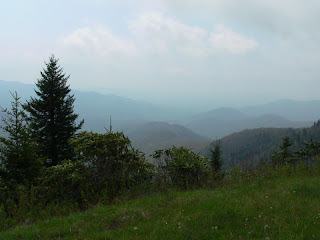
appalachian hillside copyright kerry dexter

A Far Cry, which opens the album, is a high stepping bluegrass tune, with that bluegrass gift for framing a sad lyric with a lively tune and making them fit well together. Mattea has friends accompanying her on the journey of Calling Me Home, and this tale of a lover who chose a rambling life and returned to the mountains too late is a fine way to meet several of them. Stuart Duncan is on fiddle, banjo, and other things, Jim Brock adds percussion, Bill Cooley is on acoustic guitar, Bryan Sutton on banjo mandolin, and other instruments, and Byron House on bass through the tracks on the album. Emmylou Harris, Patty Loveless, and Tim and Mollie O’Brien are among those who add backing vocals for several cuts.

 kathy mattea bb copyright kerry dexter
All the songs are gems, really. They are sequenced in a line worth the following bothmusically and lyrically, too. Change and landscape and reflections on all that are present in The Wood Thrush’s Song. There’s the lively swagger and thought provoking ideas in Hello My Name is Coal, the benediction of Agate Hill, the spiritual with a warning note in Now Is the Cool of the Day. In the title track, Calling Me Home, a man on his death bed says he will leave his stories and songs behind “as sweet traces of gold.” Bringing the recording to a close, there’s is the quiet grace of Requiem for a Mountain, an instrumental piece by Bill Cooley.

Traces of gold indeed. Mountain songs are often thought to be a bit disconnected from today’s world, to be the distant province of scholars. With Calling Me Home, Kathy Mattea continues to show that the songs themselves, and the landscapes and people from which they come, are a vibrant, living part of the world whose joys and sorrows we all share.


Kathy Mattea talks about the album: "Each record teaches you something..."


you my also wish to see
Kathy Mattea sings John Martyn
Music Road trip in West Virginia
Songwriters gather in Minnesota

photographs of Appalachian hillside and of Kathy Mattea in performance by Kerry Dexter

-->Your support for Music Road is welcome and needed. If you are able to chip in, here is a way to do that, through PayPal. Note that you do not have to have a PayPal account to do this. Thank you.

Another quick way to support: you could Buy Me a Coffee at ko-fi.com

If you enjoy what you are reading here, I've recently begun publishing an occasional newsletter at Substack with more stories about music, the people who make it, and the places which inspire it. Come visit and check it out!

Labels: , , , , , , , ,

Bookmark and Share
posted by Kerry Dexter at 0 Comments

Tuesday, September 04, 2012

Cathie Ryan: Through Wind and Rain

Hope, joy, sorrow, love, laughter, resilience, a sense of humor, a sense of history and a vivid musical imagination, along with a voice that invites listening and a way of singing that allows space for for each listener ot find a home in the music: all that together is what you will find in Cathie Ryan’s album Through Wind and Rain.
cathie ryan wind and rain irish
Ryan is both Irish and American, the daughter of parents who came from Ireland to Michigan and in summers took their children back to spend time with grandparents in Ireland. As an adult, Ryan has lived in both America and in Ireland. Her bone deep knowledge and love of the music and landscapes of both places is present in her music

Ryan chose the title of her recording from the song Walk the Road, written by Kate Rusby. Ryan sings

Think not of casting off your dreams
for all is not just as it seems
and we’ll walk the road together

all the way through and rain
I’ll never deceive my heart again
hand in hand across the land
we’ll walk the road together


Faith, friendship, courage, resilience, love , and joy in the words and in the singing, it’s a track well worth the listening many more times than once, a song which holds ideas that resonate through the music Ryan has chosen for Through Wind and Rain.
cathie ryan copyright kerry dexter
“I threw my heart in the wishing well....” Ryan sings on the first song on the recording. That image well suits the economically told and well imagined tale of love found, enjoyed, explored, and lost, and the courage to sort things out and go on again. The words of In the Wishing Well are Ryan’s own and the tune is from Irish tradition. It makes a natural connection to I’m a Beauty, a song from Laura Smith which holds both humility and self confidence in a thoughtfully sung reflection.

Mairéad Ni Mhaonaigh is best known for her fiery fiddle playing as a founder of the Irish traditional band Altan. She is also a gifted songwriter, a gift Ryan honors with Mo Nion O. Ni Mhaonaigh wrote the song, a reflection of wishes for a child framed in images of nature, in Irish. Ryan has made a graceful translation to English and includes some of the Irish as well. Through the song you will hear lanscapes of Donegal, in Ireland’s northwest, as well as as the heart of a mother’s wishes for her child.

Fare Thee Well is an Appalachian ballad through which Ryan gives voice to a quiet yet powerful story of sorrow. Liberty’s Sweet Shore, an emigration song, tells of the mixed sorrows, hope, and joys of people leaving Ireland and setting out to a new land.

cathie ryan band copyright kerry dexterLiberty's Sweet Shore was written by John Doyle, who adds his thoughtful guitar presence to many of the tracks on the album. Ryan produced Through Wind and Rain herself. Taking her time with the project, she was able to bring in the talents of musical friends from Ireland and America. These include Eilis Kennedy, Pauline Scanlon, Leslie Ritter, Aoife O’Donovan, and John Doyle on harmony singing, Matt Mancuso and John McCusker on fiddle, Michael McGoldrick on pipes and whistles, Joanie Madden on flute, Seamus Egan on bouzouki, Patsy O’Brien on guitar, and others whose names you’d recognize. They each help tell the musical story, from the dancing heart of In the Wishing Well to the blessing of May the Road Rise to Meet You to the laughter in the tale of Johnny Be Fair and the set of tunes which close the album.

Come walk the road with Cathie Ryan and her musical friends, with these songs and others equally engaging. Through wind and rain, sorrow and joy, song and tune, you will be well rewarded.

you may also wish to see
Cathie Ryan: teaching tradition
Road Trip Music: Michigan
Music for the Heart of Winter: Cathie Ryan

photographs of Cathie Ryan, and Cathie Ryan with Greg Anderson and Hanneke Cassel, by Kerry Dexter

-->Your support for Music Road is welcome and needed. If you'd like to chip in, here is a way to do that, through PayPal. Note that you do not have to have a PayPal account to do this. Thank you.

Also: I've begun publishing a newsletter at Substack with more stories about music, the people who make it, and the places which inspire it. Come visit, and consider a subscription for yourself and/or for a music loving friend.

Labels: , , , , , , , , , , , ,

Bookmark and Share
posted by Kerry Dexter at 8 Comments

Monday, July 30, 2012

American South in Song: Caroline Herring

Threads of hope, the nature of change both violent and gentle, the present as history and history as the present and always, always, the stories that connect all these things: these are what Caroline Herring offers through the songs on her album Camilla.

Images of a young girl catching fireflies and the flames of buildings burning cariline herring camilla coverintertwine in Fireflies. The title track, Camilla, takes its name from a Georgia town, and the story of a pregnant woman there who was beaten during the civil rights days, and went on to become a lawyer. Herring's gift for telling a story and making character ring true in just a few well chosen lines comes through clearly in these songs. White Dress is another song grounded in a moment during the civil rights days, when a young white girl gave a young black woman glass of water.

Until You Go, Flee as a Bird, and Joy Never Ends (Auld Lang Syne) make a trilogy on the depths of grief and the nature of healing, as well as the persistence of connection. Summer Song finds hope in the midst of images of a hard summer in the south. The center piece of the album, though, may well be Maiden Voyage, a story that arose out of Herring’s trip with her then four year old daughter to see the inauguration of President Obama -- which, in fact, they did not get to see -- with connections to history and hope and the long story of America all the same.

songwriter Caroline HerringHerring, who grew up in Mississippi, has lived in the Washington DC area and in Texas, and is now based in Georgia. All those aspects of the American south, as well as her immersion in southern literature and southern folk tradition find their places in Herring’s work and lend depth to her own unique and compelling perspective and sound. Her graceful alto anchors that sound here, in melody and style that is based in that southern folk music and draws in flavors of country and blues and Appalachian sound.

Artists you’ve met here before along the music road support Herring on this project, too. Andrea Zonn adds violin and viola to Joy Never Ends. Bryn Davies brings in her always tasteful chops on bass through the album, while Claire Holley, Aoife O’Donovan, Kathryn Roberts, Jackie Oates, and Mary Chapin Carpenter sit in for harmonies at various points on the project, which was produced by Erick Jaskowiack.

Vivid storytelling, a unique point of view, a graceful lead voice and fine support, a sense of place that illuminates ideas beyond it boundaries, wisdom in the words and in the music: Caroline Herring offers all of these in Camilla.

you may also wish to see

Road Trip Music in Mississippi
ten songs
Andrea Zonn is one of the musicians in Road Trip Music in Illinois: three fiddles

A way to support: you could Buy Me a Coffee at ko-fi.com

If you enjoy what you are reading here, I've recently begun publishing an occasional newsletter at Substack with more stories about music, the people who make it, and the places which inspire it. Come visit and check it out!

Labels: , , , , , , , ,

Bookmark and Share
posted by Kerry Dexter at 7 Comments

Friday, March 28, 2008

Kathy Mattea: Coal


Coal

“It’s got to come from the heart if you want it work” is a line Kathy Mattea sings in one her country hits. Mattea has always been good at that, whether she’s singing about the love of an elderly couple in Where’ve You Been, talking about the changes of moving on in Leaving West Virginia, or the changes of life, friends, and time in Roses. Drawing on folk and bluegrass as her way into the country music mainstream, she’s always remained a bit of a maverick in that world, holding out for and holding on to songs of substance, songs of the heart.

In her latest project, Coal, they are songs which come also from the landscape and the land where Mattea grew up. She’s from West Virginia; both her grandfathers were coal miners, and her mother worked for the miner’s union, the UMWA. Though she heard the music of such mountain musicians as Hazel Dickens, it wasn’t the sort of style she felt she could do, or was called to do. Nevertheless, the power of the songs struck her, and she began to take note of them. One of the songs on this album, Dark as a Dungeon, Mattea first heard when she was nineteen.

Then, in 2006, twelve miners lost their lives in at the Sago Mines in West Virginia. “When I was about nine, 78 miners were killed in The Farmington Disaster, near Fairmont in 1968. When Sago happened, I got catapulted back to that moment in my life and I thought, ‘I need to do something with this emotion, and maybe this album is the place to channel it’. And so I knew the time was right,” she says.

Coal mining is a tapestry of hard work, family, beloved yet harsh landscape, facing death every day, facing life everyday, hard choices, hard times, and good times and hope and love as well. All these find their places in the songs Mattea chose, and in the ways she chooses to sing them. Coal camp childhood turning into adult reality moves through the opener, The L&N Don’t Stop Here Anymore, which is framed in a fast driving bluegrass sound. Red Winged Blackbird is a piece of poetry and vivid visual imagery about death and the mines; Green Rolling Hills, though it’s about West Virginia, reminds too of the green hills of Ireland and Scotland to which many miners trace their family ties. Family ties and ties to the mine form the bedrock of You’ll Never Leave Harlan Alive, a song that’s bound to haunt you long after it’s done. The other songs on the disc are equally varied, and equally strong.

Mattea is an artist in service to the song, one who uses her gifts to further the connecting and spiritual aspects of music. It’d be easy to go over top with some of these songs, or not to go deeply enough into them. No worries about that with Mattea and the musicians she’s invited along on this journey, who include producer Marty Stuart, fiddler Stuart Duncan, and guitarist Bill Cooley. Tim O’Brien, Molly O’Brien, and Patty Loveless add background vocals.

It’s Mattea’s vision, voice, and emotion which center this powerful music, however. An artist who’s always been open to dimensions of music beyond what’s on the surface, she knows she had help with that, that her work is part of a continuing story. “I think there’s a mystery there: that somewhere in me, in my DNA, there’s my great grandmother singing, and my grandmother, and my people, singing through me, with me,” she says. “Maybe that’s why it didn’t feel like work.”

Just another thought: quite probably, the electricity by which you are reading this was generated, in part, by coal.

you may also want to see these posts
Music Road: now playing: Kathy Mattea: Black Lung: video
Music Road: ten songs
Music Road: listening to Christmas

If you find these ideas helpful

I'd appreciate it of you'd Buy Me a Coffee at ko-fi.com Thank you for considering.

If you enjoy what you are reading here, come visit -- and perhaps, subscribe -- to my newsletter at Substack for more stories about music, the people who make it, and the places which inspire it.

Labels: , , , , , , , , ,

Bookmark and Share
posted by Kerry Dexter at 0 Comments