Monday, October 04, 2021

Celtic Colours: Community beyond Geography

Home: that is a theme that has run through the more than two decades that people have been celebrating the Celtic Colours International Festival in Cape Breton Island in Nova Scotia.

That celebration is carried through music, both the unique Cape Breton style that arises from meetings of culture, and connections to those places and histories which have found home on Cape Breton. Scotland is a very strong presence -- Cape Breton is one of the few places outside the Highlands and Islands of Scotland where you may encounter Gaelic as an everyday language.

The Mi’maq First Nations were already on the island before the first Scots set foot, and they continue to share their lives with those whose ancestors came from Ireland, France, New England, and other parts of Canada and the world.

For most of its 25 year history, the Celtic Colours International Festival has celebrated across the island with music at its heart, alongside events including farmers’ markets, community meals, workshops, storytelling, nature walks, and many other events. In 2020 for health and safety reasons, the decision was taken to move the festival online.

That will also be true this year in 2021. It’s once again Celtic Colours at Home.

“I will never forget the generosity of the artists and cheerleaders from the community that were only positive and helpful when we let them all know we couldn’t do the festival as we would normally have done, “ festival artistic director Dawn Beaton remarked as staff adapted to planning how to move the festival online last year.

This year, they are building on what’s been learned. There will be live streamed concerts, along with a series of concerts recorded in venues across the island. These will include the century old Saint Peter’s Church in Ingonish, the chapel at Fortress Louisbourg, the Community Centre in Judique, and the Boisdale Volunteer Fire Department Hall. Those recorded concerts had small invited audiences of people who often volunteer during the festival, as a way to give back to both volunteers and artists.

Having been a television producer myself, I will point out, too, that the people of festival producing partners NovaStream, Sound Source Pro Audio + Lighting, and Soundpark Studio, who handle the audio, video, and recording for the events, really know how to present music in a way that creates and sustains community. They have been live streaming one concert from the festival each evening since 2011, and they’ve well met the increased demands of presenting nine days of music.

In addition to the evening concerts and the matinees, there will be a late night concert one evening, in a nod to the ever popular after hours festival club tradition. The pre show broadcasts at the evening concerts, an unexpected hit of 2020, return also. These are conversations between Dawn Beaton and her sister Margie, both top class musicians as well as professionals working in the Cape Breton arts community, Dawn at Celtic Colours and Margie at The Gaelic College.

“The Pre-show was an unexpected surprise for us both,” Dawn says  “I give full credit to NovaStream for the idea.  They saw the value of being in one spot for all nine days, and creating a spot to nestle in to before the show began.  We have a few ideas on what we will present this year, but you’ll have to tune in to find out!” Conversation about the concerts, musical traditions, and places on Cape Breton, laced with lively humour and the appearance of occasional special guests informed last year’s shows, so it will be interesting to see what the sisters have in store this time out.

All that said, this will not be quite the twenty fifth anniversary celebration anyone at Celtic Colours had anticipated.

“Like last year, it was about adapting to the changing landscape at every turn.  It was about continuing to present and employ artists, that was my priority,” Dawn Beaton says. “As a staff, we have been discussing ideas for the 25th for a few years now, so like 2020 when I was well on my way to programming, it was about letting go of those plans.  Hopefully I can come back to some of those show concepts, but right now it’s about doing the best we can with the hurdles ahead of us.”

All this may prove to have unexpected benefits, though. People who could not ever attend the festival in person will be able to see rising stars and well known artists from Cape Breton as well as guest artists from other parts of Nova Scotia, the US, Scotland, Alberta, British Columbia, Ontario, Quebec, Newfoundland, Manitoba, and Prince Edward island.

Audiences from time zones around the world can join in, and people who are unacquainted with the music of Cape Breton and those places the guest artists represent will be able to explore the music and along the way learn a bit about Cape Breton as well.

There are 18 concerts over nine days. Once a concert has aired, it will be available to watch through the end of October at the festival’s website and through its YouTube channel and Facebook page.

Events I am especially looking forward to include

Festival founders Joella Foulds and Max MacDonald will return for the opening concert, where they will be joined by percussive dancer Nic Gareiss, a former artist in residence at the festival, alongside banjo player Allison de Groot. Coming in by video from Scotland will be the band Capercaillie, who played at the first Celtic Colours and are world renown for their work in both English and Gaelic song as well for as their tunes.

Rosie MacKenzie on fiddle, Margie Beaton on piano, and Patrick Gillis on guitar will make for a lively matinee from Riverdale Community Centre in Lower River Inhabitants. They will be joined by multi-instrumentalist and singer Dècota McNamara along with fiddler Jeremy Finney.

The Chapel at Fortress Louisbourg will be the atmospheric site for another afternoon performance, as Delores Boudreau brings Acadian songs and the trio Papilio adds a mix of Celtic and international instrumentals, original compositions, and folk songs.

Close to the Floor will be an evening where connections between music and dance take the spotlight. Mac Morin, Harvey Beaton, Melody Cameron, Dawn and Margie Beaton, Jenny MacKenzie, and a roster more of players and dancers will be on hand.

There are many more events and artists to enjoy at the Celtic Colours international Festival this year,day and evening and afterwards. Note, if you plan to watch live, Cape Breton is in Atlantic Time, which is how the times are listed at the web site.

Thinking about the festival’s online situation, artistic director Dawn Beaton reflects

“Our priority was protecting all artists, staff, and technicians and I think that was the right approach [last year].That said, our online audience was incredible and didn’t feel too far away. They came through in a magnificent way and made those nine days fly by.  We still have folks coming up to us almost a year later speaking to the event and what it meant to them.”

Will you be part of the online audience for the Celtic Colours International festival this year?

Festival photographs by Corey katz; phootograph of Dawn Beaton by Ryan MacDonald

Celtic Colours at Home is presented by TD Bank Group, with the support of ACOA, Canadian Heritage, the Province of Nova Scotia, and its many other partners

You may also wish to see
Capercaillie’s album At The Heart of It All
Celtic Colours at Home 2020
A tune from Dawn and Margie Beaton is part of this story Geography of Inspiration Music and Place, at Wandering Educators
want to learn a Gaelic song yourself? Here is a place to begin.

-->Your support for Music Road is welcome and needed. If you are able to chip in, here is a way to do that, through PayPal. Note that you do not have to have a PayPal account to do this. Thank you.

Another way to support: you could Buy Me a Coffee at ko-fi.com

If you enjoy what you are reading here, check out my newsletter at Substack for more stories about music, the people who make it and the places which inspire it.

Labels: , , , , , , , , , ,

Bookmark and Share
posted by Kerry Dexter at 0 Comments

Tuesday, November 10, 2020

Canada's music: Sketches from Natalie MacMaster

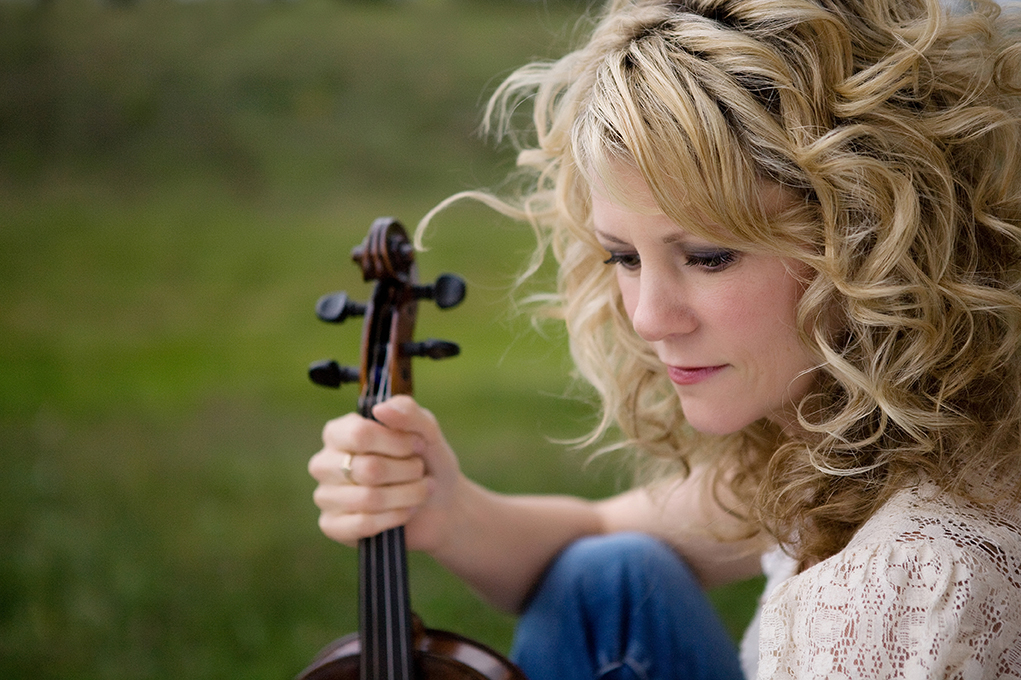
Natalie MacMaster remembers when she came to hold her first fiddle.

"My grand uncle, Charlie MacMaster, who lived in Boston, sent a three quarter sized fiddle to our family -- not just my immediate family, our whole extended family -- sent it up to Cape Breton and said any of the kids who want to play this instrument can keep it,” she recalls. “There were a couple of other people who looked at it. I remember Dad taking me to see the fiddle and I just fell in love with it. Nobody else wanted it, so I took it, and that night, I started playing." She was nine.

That falling in love with the fiddle has lasted.

Exploring and sharing that love have led her to become one of Canada’s most well known and well loved musicians, and equally well known and respected for sharing the unique music of Cape Breton Canada around the world. She’s received many awards, nominations, and other recognitions, among them a Grammy award and nomination, a Juno award along with seven nominations, numerous East Coast music awards, three honorary doctorates, and induction as a member of the Order of Canada.

All of which she appreciates, but it is the making of music, the music she grew up with which can be fiery, bright, and fast paced as well as haunting and gentle, that is at the heart of what Natalie MacMaster does.

It is at the heart of her album Sketches, too.

It had been a while since MacMaster had made a solo album -- not that she hadn’t been making music, having done two albums with her husband and fellow fiddle player Donnell Leahy, continued to tour across Canada and beyond, worked on founding the Greenbridge Music Festival near their home in Ontario, begun a couple of book projects, and worked on ideas for a concert with an orchestra -- not to mention working on home schooling the couple’s seven children. In the midst of all that, in the winter of 2019, she knew it was time for another project.

While preparing the duo album with Donnell, she and guitarist Tim Edey did some jamming together.They had not worked together before. MacMaster loved it/ “I said to him ‘We are absolutely going to record something that sounds just like this!’” she recalls.

t’s a fine pairing of talents. From the blast of reels which opens the recording, a tune each from Jerry Holland, Martin Mulhaire, and MacMaster herself, to the gentle Professor Blackie from James Scott Skinner on through reels, barn dances, strathspeys, jigs, a set of tunes to honor the dance, and a nod to Bonnie Raitt with the melody of I can’t Make You Love Me, it’s a good journey with many a twist and turn.

Joining Edey in support of her vision, Marc Rogers adds tasteful touches of standup bass, while on selected tracks Mike McGoldrick joins on flute, Stuart Cameron on 12 string guitar, Frank Evans on 5 string banjo, Remi Arsenault on bass guitar, and Mark Kelso on percussion.

MacMaster has a lot to say through her fiddle and she says it well, speaking clearly of the lively community, the changing seasons on the landscape, the tradition of dance, those who’ve passed the traditions of Cape Breton on to her, and her own creative take on all these things.

It is her playing and vision which center the recording. All the tracks are well worth repeated listenings.

One of my favourites is the Killiekrankie set, with the quiet namesake tune followed by a blast of faster tunes. Of the set MacMaster writes: “The first tune is one of my top picks of favourite fiddle tunes ever! Not sure why it didn’t make it on any of my previous recordings but I am delighted it’s here. Following are a typical blast of Cape Breton strathspeys and reels.”

Cape Breton music draws deeply from the well of the musics of Scotland which early settlers brought with them across the seas. It is also a music rooted in landscape and grounded in community in this place in Atlantic Canada where sea meets forest meet sky.

“No other music makes me feel the way this music does,” MacMaster said. “ I’m not talking about my own music, but the music of those who came before me, and of my peers. It lifts me up and makes me want to get up and dance, and it soothes my soul. It gives me pure peace.”

Those are qualities Natalie MacMaster well knows how to share with her listeners.

While preparing for the release of Sketches, eight years on since she had recorded her last solo album, she reflected that it was a time she wanted to mark. “This is a moment during my 47th year of life, my 37th year of fiddling, my16th year of marriage, and my 13th year of parenting,” she said. “It’ll be a moment of joyous appreciation inspired by years of parenting, marriage,friendships, music, and life.”

Give a listen to Sketches, and share those moments with Natalie MacMaster and her music.

Also to note: MacMaster, Leahy, and their children are taking their popular Christmas concert online this season, supporting a number of venues where they have often played in person. Look to their website for details on dates and tickets.

You may also wish to see
Tim Edey: Christmas music on guitar
Natalie MacMaster and Donell Leahy: One
Leahy Live in Gatineau dvd
Alasdair Fraser, Natalie Haas, Hanneke Cassel: Travels in Music on Fiddle and Cello

-->Your support for Music Road is welcome and needed. If you are able to chip in, here is a way to do that, through PayPal. Note that you do not have to have a PayPal account to do this. Thank you.

Another way to support: you could Buy Me a Coffee at ko-fi.com

If you enjoy what you are reading here, check out my newsletter at Substack for more stories about music, the people who make it and the places which inspire it.

Labels: , , ,

Bookmark and Share
posted by Kerry Dexter at 0 Comments

Sunday, June 11, 2017

Celebrating Cape Breton's heritage and connections through music: Celtic Colours Live volume 4

Cape Breton lies in the far north of Nova Scotia, in Atlantic Canada. There are parts of the island which do not look lot like Scotland, and places where it looks very like. Places where it sounds like Scotland, too: Cape Breton is almost alone as a place outside Scotland where Scottish Gaelic is spoken. Spoken and sung, that is. When immigrants -- some seeking a better life, some fleeing political and economic strife, some driven from their homes-- came over from Scotland, they often brought with them few material goods. They did, however, bring their songs, their tunes, their dances, and their stories.

They found First Peoples tribes on Cape Breton, and across the years, as more people from Scotland came, so too came folk from Ireland, from the United States, from central Europe, from Scandinavia, from other parts of Canada. The heart of Scotland’s culture beat strongly through all this, sharing influences and being influenced by landscape, weather, and life on an island as well as crossing paths with people from these other backgrounds. So a unique culture emerged, connected to Scotland but different, one that could -- and still does -- celebrate the distinctions as much as the connections.

Every year in autumn the people of Cape Breton invite the world home to experience this. For nine days in October each year beginning just before Thanksgiving in Canada, concerts and cultural events are staged all across the island in communities large and small, in purpose built concert halls, churches of many faiths, school houses, fire halls, pubs, historic sites from one end of the island to the other. This is the Celtic Colours International Festival.

The music is both focused and diverse, There are tradition bearers from Cape Breton, and rising stars. There’s always good representation from the other provinces of Atlantic Canada, from Ireland, from the United States, from across the rest of Canada, and naturally from many parts of Scotland. Both tradition bearers and rising stars are part of these strands of music as well.

You may be reading this in summer and thinking: Why am I hearing about this now since it happens in October?

One reason is the recording Celtic Colours Live volume four. Through thirteen tracks recorded live as they happened in venues across the twentieth anniversary season of the festival in 2016, you will get a fine feeling for what the music of Celtic Colours is like.

In a concert from the Acadian part of the island in Belle Cote, Le Vent du Nord kicks things off with rousing Quebecois style. Fiddle tunes from Andrea Beaton and Liz Carroll hold a lively dialogue among Cape Breton, US, and Irish strands, from an event recorded at the Dangerous Duos concert in Mabou.

That Dangerous Duos concert, by the way, is a good taste of what Celtic Colours does so well -- not only do old friends get to meet up and play music together, but people who don’t usually play together join up. Scheduled or not, the results are always well worth the hearing. There are several other collaborations from the Dangerous Duos evening on Celtic Colours Live volume four.

Speaking of collaborations: the whole of The Unusual Suspects band could be seen as that. In Scotland, musicians Corrina Hewat and Dave Milligan had the idea of creating a folk orchestra, with players from the varied regions and traditions of the country. Not an easy task to pull off -- but they did it, and have kept it going for some time. They’ve brought it to Celtic Colours before, too, where they become The Unusual Suspects of Celtic Colours by adding top Canadian musicians to the mix, folk such as, in 2016, Wendy MacIsaac, Lisa MacNeil, and Daniel Lapp. Scottish and CB tunes made up the band’s Finale Set, which is what appears on record for this album. Not quite as high energy as being there, but almost.

There is plenty of high energy music on the recording, and at the festival itself. There are quieter times too, though, and these are well represented. Top Scottish storyteller in song Archie Fisher joins up with CB guitarist Cyril MacPhee for the Buddy MacDonald song We Remember You Well. Newfoundland trio The Once. who are Geraldine Hollett, Phil Churchill, and Andrew Dale, bring their original song Gonna Get Good. Scotland’s Dougie MacLean joins up with Canada by way of Scotland guitarist Tony MacManus for the song Talking With My Father -- listen out for that guitar on this track.

There’s more -- Gaelic song from students at the Royal Conservatoire of Scotland, Irish fiddle from Liz Doherty, Americana and Canada meeting up in the work of April Verch and Joe Newberry, and of course Cape Breton music and artists through it all.

It is no easy task to make a live recording work. This one does on all counts, with the music, the hints of audience sound, the occasional tapping or step dancing feet, and the sense of presence in the venues. Congratulations to Jamie Foulds, who recorded, mixed, and mastered the tracks, and Declan O’ Doherty, who produced.

If you happen to be reading this in summer, you’ll want to know that the Celtic Colours Festival will be announcing the artist line ups near the end of June, and tickets will go on sale in mid July for the festival, which will take place in 2017 from 6 to 14 October. In addition to half a dozen or so concerts each evening of the festival, there are talks, workshops, art exhibits, farmers and craft markets, community meals, storytelling times, music sessions, ceilidhs, events for children... keep your eye out on the festival web site celtic-colours.com for information about all these things.

One other thing: For every ticket sold for the 2017 festival, there will be a maple tree planted on Cape Breton Island.

You may also wish to see
Scotland’s Music a Different Way: The Unusual Suspects.
Sounds of Cape Breton
Cape Breton Music: Remembering Raylene Rankin
Celebrating Canada and Newfoundland: The Once
Canada’s music: Natalie MacMaster and Donnell Leahy
Tony McManus: The Maker’s Mark

-->Your support for Music Road is welcome and needed. If you are able to chip in, here is a way to do that, through PayPal. Note that you do not have to have a PayPal account to do this. Thank you.

Labels: , , , , , , , , , , ,

Bookmark and Share
posted by Kerry Dexter at 0 Comments