Monday, April 24, 2023

Scotland's music: Breabach celebrates nature and hope with Fàs

Fàs: in Gaelic, it is word that means growth, developing, and sprouting.

It is also the name Breabach have chosen for their recent album. Both musically and in outlook, those ideas are good descriptions for what they’ve been exploring

The music most often holds connection to the natural world and ideas of change. That parallels a bit what is going on with Breabach’s musical evolution, too: staying true to their love of and expertise with tradition, they continue to take tradition forward and add to it in thoughtful and creative ways.

The five members of Breabach are well qualified to do this individually. One of the fine things about listening to the tracks on Fàs (and seeing the band live, too, which you need to do if ever you have the opportunity) is enjoying their excellence at collaboration, too.

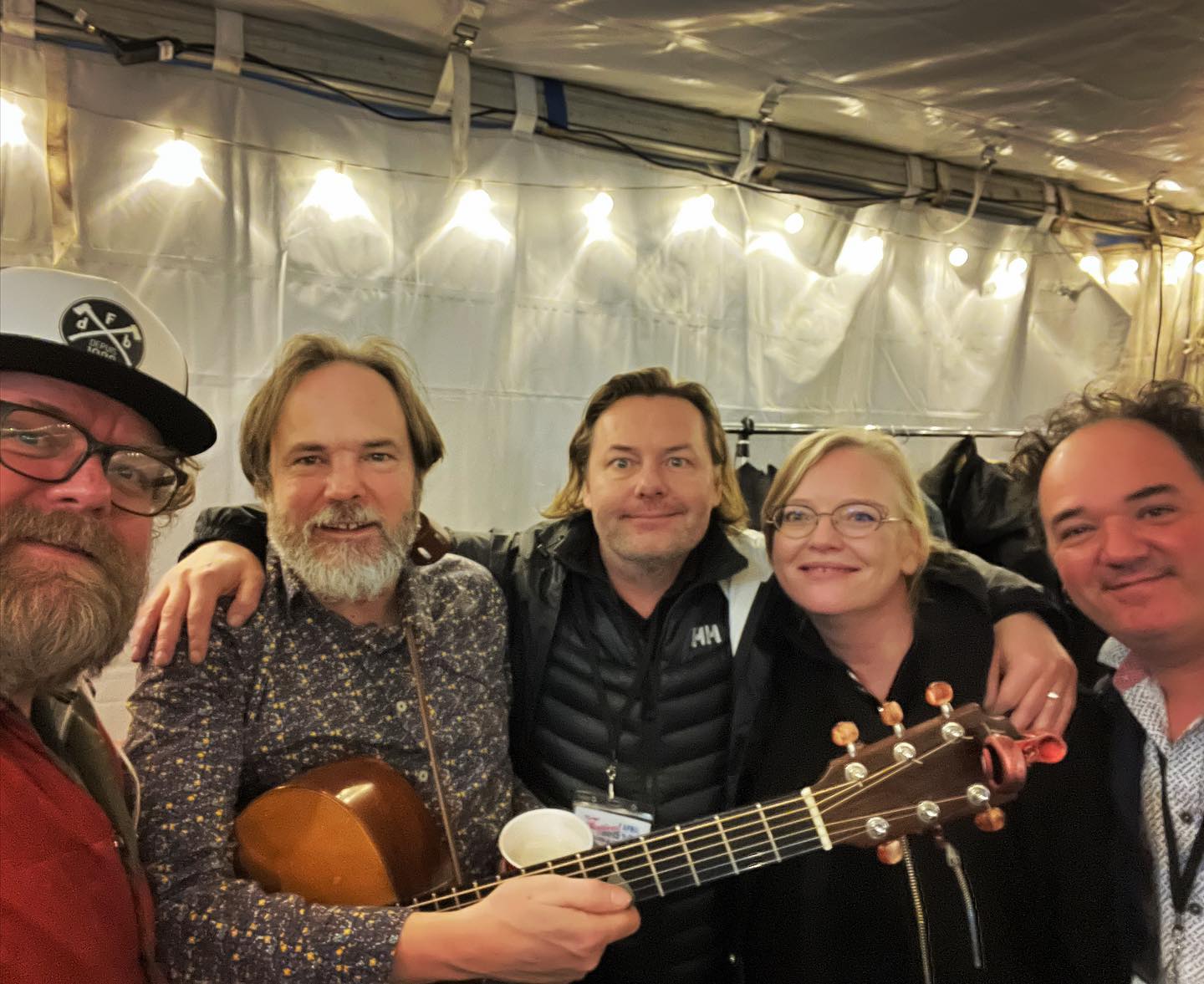
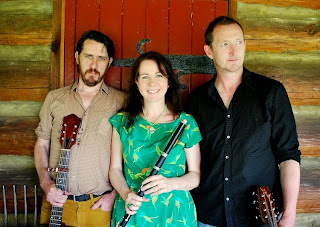
Breabach are Calum MacCrimmon on Highland pipes, whistles, bouzouki, vocals; James Lindsay on double bass, Moog, vocals; Ewan Robertson, who plays acoustic and electric guitar in addition to singing; Megan Henderson on fiddle and vocals, and newest member of the band (this is his first time recording with the group) Conal McDonagh, on Highland pipes, uilleann pipes, whistles, and vocals.

The ten tracks on Fàs find the band offering a fine mix of trad and original music, with song in both English and Gaelic, balanced with a good range of tunes as well.

The opening set, The Old Collection, holds three traditional tunes along with one composed by Calum. It offers good introduction to the band’s way with honoring tradition as well as adding their own spark. That’s lightly done, adding just a t touch of something a bit different to the band’s imaginative work.

Part of that spark comes out now and then through touches of synth from guest Keir Long and percussion from Inge Thomson, too -- just enough to add in to mix at times. Thomson produced the album, and given her fine ear for connection electronic and acoustic elements in her other work, it’s no surprise she does it well here.

Ewan Roberson wrote and takes lead voice on Revolutions. which he remarks was inspired by reading about renewable energy and making a visit to a wind farm. “A love song to a wind turbine,” he calls it. It is that, and there’s more thoughtful stuff going on in its lyrics, too and in the video the band has made to go along as well.

Megan takes lead for the Gaelic song Eadar An Dà Bhraigh, written by her brother Ewen Henderson. It’s to celebrate the sustaining of a woodland ecosystem just south of the Cairngorms. That might not at first sound a likely subject for a lovely song, but in the writing of Ewen and the voices and instruments of Breabach, it becomes just that.

Another favorite is the set Brog to the Future, which comprises three tunes celebrating the promises of nature and of the coming generations. There’s one from Cape Breton fiddle player Kinnon Beaton, one from Megan, and one from Conal, to make a lively and engaging set.

Megan composed the title tune after taking part in a Fridays for Future march with Ewan and their young daughter at the COP26 climate meeting in Glasgow. Brog means shoe in Gaelic, and Conal’s tune also has to do with shoes, while Kinnon’s is a reel for a school graduating class. Steps to the future, perhaps.

Another excellent set is Dear Green, with tunes composed by Megan in honor of Glasgow and its green spaces, and by James in honor of the Global Seed Vault in Norway, which also provides hope for future. Not subjects every musician would choose or would be able to bring off, but these two, along with other band members and guests Long and Thomson, do it with class.

Class is a fair description all that’s going on in Fàs, There’s the title track, which brings together trad and contemporary in good style, Megan’s fine singing in a song sourced frm Cape Breton, a cover of a Jim Malcolm/John McLellan piece, and a march from Calum.

To draw the album to a close and to draw the threads of ideas of nature and future together, Breabach offer song from Calum -- he takes lead voice, too -- called Changing World. This thoughtful and thought provoking piece was inspired by Calum’s reflections during lockdown, looking out his window and seeing natuee flourishing in the absence of human activity.

Fàs is an album weLl worth the listening, worth repeated listening. Every time you do so you will hear new colors, voices, and ideas. It is a great next step for the top class musicians of Breabach.

...and in case you were wondering about sustainability, the disc comes in a sleeve of FSC certified stock, printed using all vegetable inks.

You may also wish to see
Another album from Breabach, Frenzy of the Meeting
A video of the title track is part of this story at Wandering Educators Music for the new year: possibilities of hope
A look back at one of Inge Thomson’s concerts at Celtic Connections
Another recording that celebrates nature, The Woods from Hamish Napier

--> Your support for Music Road is welcome and needed. If you are able to chip in, here is a way to do that, through PayPal. Note that you do not have to have a PayPal account to do this. Thank you.

You can also Buy Me a Coffee at ko-fi.com

Labels: , , , , ,

Bookmark and Share
posted by Kerry Dexter at 0 Comments

Wednesday, March 01, 2023

The long story: music across time

Music connects us to each other.

It can also be a way to connet across time and place.

These images may help you think about this. You may also want to listen to the music on
Thar Toinn/Seaborne from Muireann Nic Amhlaoibh
The Farthest Wave from Cathie Ryan
Alterum from Julie Fowlis
Dialogues from Su-a Lee
The Woods from Hamish Napier

It has been a bit quiet here of late; there will be more say about upcoming and current projects coming along.

In the meanwhile, have a look and listen to those stories and albums noted above, and take a look throught the archives here at Music Road too. A good lot of music and ideas to explore within.

Enjoy what you are finding at Music Road? You could Buy Me a Coffee at ko-fi.com Thank you!

Labels: , , , , , , , ,

Bookmark and Share
posted by Kerry Dexter at 0 Comments

Sunday, December 04, 2022

Second week in Advent: Music from Spell Songs, Rani Arbo & daisy mayhem, Ruth Keggin and Rachel Hair

Celebration in winter months may be lively. It may also be quiet. Music can align well with both of these circumstances.

In the second week of Advent, here are ideas to go along with your lively celebrations and your quieter ones.

This song, Oak, is a good one to get thinking about nature, about time, about connection -- all good things to contemplate in the winter season.

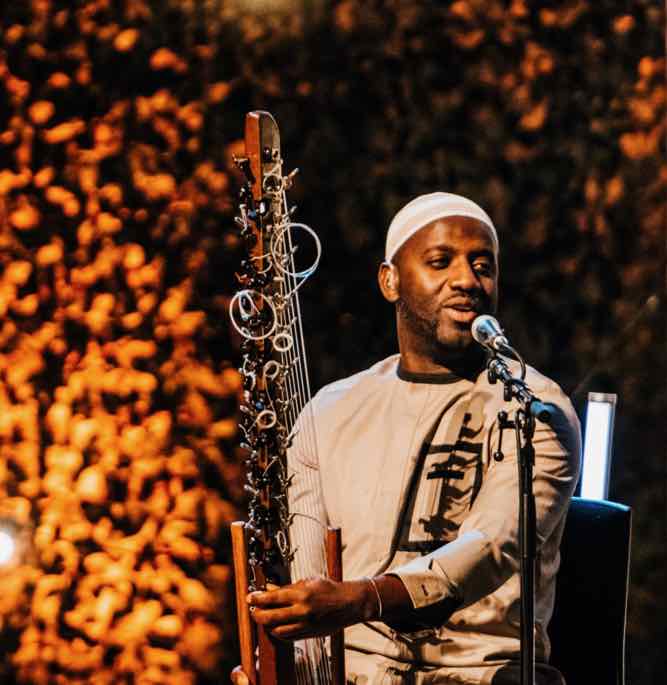
Kris Drever, who comes from Scotland, sings lead here, accompanied by other members of the Spell Songs ensemble, who are Jim Molyneux, Seckou Keita, Rachel Newton, Karine Polwart, Beth Porter, and Julie Fowlis. You will find Oak recorded on Spell Songs II: Let the Light In. Learn more about the here is a way to do that, Spell Songs albums and artists in this story

Whether or not you like the drink hot buttered rum or indeed if you have never heard of it, there is good reason to listen to the song of that name.

Hot Buttered Rum the song celebrates and reminds of the healing possibilities of friendship, love. connection, and hope in the midst of dark and cold. New England based band Rani Arbo and daisy mayhem (who are, in addition to Rani, Scott Kessel, Andrew Kinsey, and Anand Nayak) recorded on their album Wintersong.

Arraneyn Cadlee is the name of a set of two Christmas lullabies which start off the album Lossan from Ruth Keggin and Rachel Hair. Ruth is the singer for the track; Rachel plays harp.

The words of the songs are in Manx Gaelic, the language of the Isle of Man. That is Ruth’s native place. Rachel, who is one of the top harp players in Scotland, has been visiting the Isle of Man for a number of years to perform and to teach. The women met at a session some ten years ago and from time to time performed together, eventually deciding to create a duo album. Lossan is the result. Look for more to come about Lossan here along the music road.

You may also wish to see
A reflection on the first week in Advent
Learn a bit more about the Isle of Man and its traditions
Another album from Rani Arbo and daisy mayhem
Music for lighting the path, at Wandering Educators
A recording from Julie Fowlis

Your support for Music Road is welcome and needed. If you are able to chip in, here is a way to do that, through PayPal. Note that you do not have to have a PayPal account to do this. Thank you.

You can also Buy Me a Coffee at ko-fi.com

Labels: , , , , , , , , , , ,

Bookmark and Share
posted by Kerry Dexter at 0 Comments

Wednesday, June 15, 2022

Manran and The McDades: moving tradition forward

The range of Celtic tradition and new dimensions for its present and future: all that is part of the work of the musicians of The McDades, based in Alberta in Canada and Maran, based in Glasgow, Scotland.

It’s always g balance to draw inspiration from music of a tradition, play song and tune handed on and handed down, while putting your own mark on it, at the same time staying true to this spirit of those who have handed it on.

Another way to do that, one that arises naturally from loving and being immersed in traditional styles, is creating new music which respects and draws on tradition, while placing one’s own voice within its story.

Manran and The McDades, in differing yet related ways, are really good at this. The tradition, in the case of both bands, is mainly music of Scotland, with touches of other influences of several places and sorts now and again.

Manran: Urar

Manran has been part of the Scottish traditional music scene for elven years at this writing. Known for high energy trad rock that has listeners up on their feet as often as not, the seven member group is also well skilled at interpreting and creating quieter, more reflective pieceso.

Both these aspects of the band’s music arepresented in their album Urar. That’s a word in Gaelic which means flourishing. That well suits the character of the music on offer.

The material is largely written or arranged by members of the band, with each artist contributing to the project. Founding member of Manran Gary Innes plays accordion. Ewen Henderson is on fiddle, Highland bagpipes, vocals, piano, and synths. Ross Sanders handles bass guitar and Moog. Ryan Murphy is on uillean pipes whistle, and flute. Mark Scobie adds in drums, Aidan Moodie brings in guitar and backing vocal, and Kim Carnie is on vocals.

Kim and Aidan are the most recent members of the band, having both joined in 2019. Urar is the first Manran recording on which both of them appear. They joined up to create the song Crow Flies, which they co-wrote over distance during lockdown. The substance of the song is about supporting one another during uncertain times and being willing to take risks.

Those are ideas which recur in varied ways across the music on Urar, in tune and in song and in Gaelic and in English. Each of the band members knows well how to create and to collaborate in telling stories through music.

There is Manran’s trademark high energy present as part of such storytelling.

While that may at first seem an unlikely way to treat a song of grieving those lost at sea, the song Ailean proves an excellent way to appreciate this aspect of the band’s creativity. The Black Tower set, comprising a tune written by Ewen paired with a piece based on ancient legend and geography written by Mischa MacPherson, offers another way to appreciate how well these artists use instrument and voice both tell story..

The tunes are equally engaging. In addition to that first tune in The Black Tower set, listen out especially for the reel Creamery Cross, named by Ryan for a place near his mother’s home in County Clare in Ireland, and for The Loop, a set of three tunes, one from Ryan, one from Gary, and another from piper Peter Morrison of the Peatbog Fairies.

There is a set of Puirt, a song in Gaelic about a ridiculous pair of trousers, a tune in tribute to a favourite surf beach, a Gaelic song from a poem by Ewen honoring the tradition fo planting saplings for those who are gone too young, a song in English celebrating connection across distance, and other musical adventures to explore..

To draw things to a close, the band chose Griogal Chride. This is lament dating to 1570. Again it shows the fine way Manran works as a band to honour music and story, briging together ideas they’ve been sharing across the music on the album, with excellent playing and a memorable lead vocal from KIm.

The McDades: The Empress

The McDades well know how to honour story through their music, too.

The heart of the band are brothers Jeremiah McDade, whose instruments are whistles, guitar, bansuri, saxophone, and and vocals, and Solon McDade who is on bass and vocals, and sister Shannon Johnson, whose instruments are fiddle and voice. Alongside the siblings are musical friends Andy Hillhouse on guitar and vocals and Eric Breton cajon, darbouka, and other percussion.

The McDades are known for being based in Celtic tradition and for drawing on other styles on genres for inspiration and exploration.

That’s true of what they offer on The Empress.

You will find, for example, a lively version of the traditional song Willie Reilly.. It finds Shannon telling the tale about star crossed lovers and a man’s day in court with her lead vocals, alongside creative and fast paced percussion and instrumental backing.

The energy continues and picks up pace a bit with the original tune The Oak, Ivy and Ash, which may well have you up and dancing, or at least, tapping your feet as you listen.

Sundown, written by fellow Canadian Gordon Lightfoot, is a classic of contemporary folk song. It stands up well to treatment by the McDades which both honours that aspect of the song and intersperses the verses with breaks which include jazz flavored saxophone lines.

Blues and jazz come into play as The McDades offer a haunting cover of Plain Gold Ring, which was written in the 1950s by Jack Hammer. They head back into Celtic direction at first with the title track The Empress, but if you want to name other genres The McDades include in their music, you will find several of those in the tune as well.

About that title, The Empress? There are reasons behind the choice.

The heart of the band is the collaboration among Jeremiah, Solon, and Shannon. In the tarot, The Empress is the third card, meant to represent power and productivity of the subconscious, and said to open doors for creative and artistic energy. The band points out in press material about the album that they were drawn to these ideas, to the symbolism of the number 3, and to connections to the ideas of creativity growth, and expression.

With both of these albums, you will find stories directly and indirectly drawn from earlier times. You will find instrumental creations and collaborations as complex as any you’ll find in classical or jazz. Engaging and expressive singing carries the stories and traditions forward as well.

Manran and The McDades each offer material for inspiration, reflection and celebration -- musical journeys well worth the taking.

You may also wish to see
Urar was produced by Calum MacCrimmon. You will know him as a member of Breabach
Ewen Henderson has a solo album out Steall/Torrent.
Kim Carnie is also lead singer withe the band Staran. Learn about Staran’s debut album Kim has a solo album out soon as well, bout which more to come.
An earlier album from The McDades, Bloom
Shannon Johnson has produced many of Maria Dunn’s albums, including the Juno winning Joyful Banner Blazing. Jeremiah and Solon play on this and other of Maria’s albums as well.

If you enjoy what you’ve been reading here, a way to support more of it: Buy Me a Coffee at ko-fi.com

Labels: , , , , , , ,

Bookmark and Share
posted by Kerry Dexter at 0 Comments

Saturday, April 09, 2022

Spell Songs II: Let the Light In

The drift of a leaf in autumn wind, the flutter of a moth's wings as evening fades to night. The half glimpsed movement of an animal just out of view, the call of a jay, the swirl of swifts against the sky -- these connections with nature frame our days.

Even if you have always lived in cities, you know and feel some of these things, don’t you?

Reflection on the varied connections between humankind and nature, and the ways those are changing, are part of what inspired the music of the album Spell Songs II: Let the Light In.

It is the second album from the group which has become known as the Spell Songs Singers: Jim Molyneux, Kris Drever, Beth Porter, Julie Fowlis, Rachel Newton, Seckou Keita, and Karine Polwart.

The musicians in turn drew inspiration from the art of Jackie Morris and the words of Robert Macfarlane. We’ll get to a bit of background on how that came about. First, though, consider what the musicians create on Spell Songs ii.

There are fifteen songs on the album, with each musician taking a turn or two at lead voice, and working in creative collaboration with harmony and instrument through the others.

They each play as well and sing -- Porter on cello, Molyneux on keyboards, Drever and Powart on guitar, Keita on kora, Newton on harp, Fowlis on whistles. Those are their main instruments, though each often takes out othersas well, Fowlis taking up the oboe, for instance, Newton moving over to fiddle, Polwat picking up bass.

That may begin to give you ideas of the musical complexity on offer; it is complexity in service of creativity, though. That comes through in the singing, and in the writing that formed the words and music.

Some songs come directly from Macfarlane’s poetry, others go in directions sparked by his words and Morris’s art onto different paths. Each of the artists is rooted in music which respects tradition, be that tradition of England, Scotland, or Senegal. Each of those traditions meet at points along the way in the music of Spell Songs II.

Polwart begins the journey taking lead on the slightly spooky Bramble. Nature is not always kind and often mysterious, an idea that continues as Fowlis follows with the haunting song Saint Kilda Wren, in Gaelic.

In Oak, Drever offers stories of the long lived tree, living its life for centuries as human cone and go, and connect with its wood for “the wheel that makes the seasons turn/the the beasts that shelter in the barn/the table that we sing around/ the casket we put in the ground,” and in many other ways. There is dimension from a verse from Keita’s sung in Mandinka, and from the other singers adding backing harmonies.

In each of these tracks and all others on the recording, the musician singing lead gives his or her own character to anchor the song. Spell Songs is very much a band project, though, in creation and in execution, as each musician’s work is supported and enhanced by contributions from the others.

That is true for each of the songs. One especially good place to hear it is in the song Swifts. Rachel Newton’s voice soars and swirls as do the named birds, while Drever adds second lead voice and each of the others contributes as well.

Seckou Keita brings a bluesy call and response idea to the presence of a familiar bird in Jay. Beth Porter’s lively take in the song Daisy readily evokes daisy chains and “tiny suns turned skyward,” while Jim Molyneux offers wistful, bittersweet melody and words to evoke the coming and going of swallows.

There are more such gems on the recording -- each of the songs is well worth repeated listening, in fact.

Plant life comes in for more musical discussion as Porter reflects on pushing one’s way through tangled gorse, and through challenges.

Fowlis takes lead on on the wintery, eerie Bird of the Blizzard, which evokes snow, ice, and change, and reminds that nature is facing change, some of it devastating.

Polwart gives another view of nature with the song Thrift, in which persistence of the seashore plant is a reminder to dig in and hang on as hardships arise.

That idea of nature dealing with change faces the fox, lead actor as Kris Drever sings Red Is Your Art. Working and living just as the margins of human life and the natural word change these days, the fox poses the question, when I am gone, when I am driven out, will you think it was worth it?

That is an idea that frames creativity here. As Fowlis sings in Bird of the Blizzard, there’s “a map made of wonder, that tracks what is fading” and “memory’s keeper is you.”

That is a idea that resonates with the fox’s query in Red Is Your Art, the persistence in Gorse and Thrift, the long lasting Oak.

It turns up as well as the thoughts Julie, Karine, and Seckou offer in Barn Owl, as they intertwine words in in Gaelic, Scots, and Mandinka on the themes of, as Karine sings it “Tak nae mair nor ye need (take no more than you need).” As indeed owls flying by night do in their travels.

In differing ways Moth, with Karine in lead, and Curlew from Rachel both honour and suggest change in nature and in our own lives, and in ways direct and indirect, the persistence of hope as well.

Fowlis takes lead on the closer, a song called Silver Birch, which draws together ideas from this recording and references a bit to the first Spell Songs album, as well.

Snow is falling, my silver-seeker;
soon the path will be lost to sight,
soon the day the day will give way

Fowlis sings. Later, though, she continues

The sun is rising, my silver-seeker

warms the pines, and breathes the larches
...Soon the blackbird will take her flight.

As promised, a bit more background to the Spell Songs projects and how they came to be:

Several years back, artist Jackie Morris learned that a number of words. most to do with nature, were to be dropped from a popular children’s dictionary where she lived in the UK. She decided to create a book of paintings that would honour these words and the nature they represented. She contacted nature writer Robert Macfarlane to see if he’d write an introduction for such a book. He came back withe idea, What if I wrote poems to go along with the paintings, spells to call words and nature back, so to speak?

The book the Lost Spells was born. Eventually presenters at the Folk by the Oak Festival in England had the idea to bring together artists they knew had an interest in nature to create music based on these ideas. The first Spell Songs album came to be. Later Morris and Macfarlane collaborated on a second book, called The Lost Spells. and so, a second album, Spell Songs II:Let the LIght In, came about. Morris, by the way, often joins the singers on stage, creating paintings live as they sing.

Photographs of the Spell Songs artists in performance at the Glasgow Royal Concert Hall during Celtic Connections by Gaelle Beri, courtesy of Innes Campbell Communications.

You may also wish to see.
Learn about the first Spell Songs recording,
About the second book from Morris and Macfarlane, The Lost Spells
Laws of Motion from Karine Polwart
Alterum fromJulie Fowlis

--> Your support for Music Road is welcome and needed. If you are able to chip in, here is a way to do that, through PayPal. Note that you do not have to have a PayPal account to do this. Thank you.

Another way to support: you could Buy Me a Coffee at ko-fi.com

If you enjoy what you are reading here, check out my newsletter at Substack for more stories about music, the people who make it and the places which inspire it.

Labels: , , , , , , , , , ,

Bookmark and Share
posted by Kerry Dexter at 0 Comments

Saturday, March 05, 2022

Ireland's music: Day Is Come from The Alt

Stories told through song: that is one thing the three musician who are the trio The Alt love and have in common.

They are great at telling stories through tunes -- music with no words-- as well.

As well they should be, as each of the three musicians -- John Doyle, Nuala Kennedy, and Eamon O’Leary -- have flourishing careers with other music projects. They also like the music and sound the create when they have the chance to get together. Hence, The Alt.

Day Is Come is their second recording together. On it, you will find a lively journey of song in both English and Irish, along with class tunes, some original and some drawn from traditional sources.

All three sing, and well know how to handle lead voice as well as support others. O’Leary plays bouzouki and harmonium on the recording, Doyle adds his own touch on bouzouki as well as playing guitar, mandola, keyboards, and bodhran, and Kennedy plays whistles and flutes. Guest fiddlers Marius Pibaret and Kevin Burke sit on several tracks.

Each of the ten tracks on the album is well worth repeated listening, as is the story as the artists have sequenced it. That said, several to listen out for especially include

Ta Na La/Day Is Come is an Irish language song, a cheerful drinking song at that. The trio offer it in a version known in Oriel, the ancient medieval area on the east coast of Ireland of which Nuala’s home town of Dundalk is part. As is fitting for that, Nuala’s light and lively voice leads the vocals after a short intro on the flute. The men join in on the choruses and their strings add sparkle to the vocals and join the flute for instrumental breaks framing the verses.

For the The Willow Tree, O’Leary takes lead voice. It’s a song in English by the scholar, singer, and songwriter Padraigin Ni Uallachain, whose music you have met here along the Music Road several times. It’s a reflective love song grounded in Irish landscape, which sounds as though it could have come from centuries back rather than being a contemporary piece. Harmonium and guitar weave a journey around O’Leary’s warm baritone and the graceful backing of Doyle’s tenor and Kennedy’s soprano. Kevin Burke joins on fiddle.

The Connaught Rangers has lyrics from a poem by Winifred M. Letts, set to music composed by John Doyle. The three musicians sing unaccompanied, with John’s strong tenor taking lead on lyrics which are a lament for those from Ireland who served in World War I. It is a fine way to hear just how good their harmonies are, and how well the three musicians work together.

You’ll do well to listen to each of the other tracks as well, which include a lively song in Irish which Nuala often sings to her young children, fine harmonies from Nuala and John backing Eamon’s lead on Paddy’s Land along with great playing from all three, two sets of tunes which mix originals from Kennedy and Doyle with tunes from the tradition, and a great version of the Child ballad Flower of Northumberland with Nuala on lead.

Day Is Come has no shortage of lively music, but through all that there’s a reflective, feeing, somewhat quieter in feeling than their first album. That John Doyle, Eamon O’Leary, and Nuala Kennedy created this outstanding collaboration during constraints on travel and connection is testament to their resilience and creativity as well as their musicianship.

Day Is Come is lasting music, with music to tap your feet or step along to,, to sing with, to enjoy quietly. Stories of Ireland well told in music indeed

You may also wish to see
Songs of the Scribe from Padraigin Ni Uallachain
The Path of Stones from John Doyle
The Alt, the trio’s first album, self titled
A bit about Nuala Kennedy’s album Behave the Bravest along with three other albums you may enjoy...

-->Music Road is reader supported . Your support for Music Road is welcome and needed. If you are able to chip in, here is a way to do that, through PayPal. Note that you do not have to have a PayPal account to do this. Thank you.

Another way to support: you could Buy Me a Coffee at ko-fi.com

If you enjoy what you are reading here, check out my newsletter at Substack for more stories about music, the people who make it and the places which inspire it.

Labels: , , , , , , , , , , ,

Bookmark and Share
posted by Kerry Dexter at 0 Comments

Wednesday, November 24, 2021

Holiday Gift Ideas: 3 New Recordings

Music: it is part of the holidays, and part of every day.

Music is also a great gift, one which may be enjoyed alone or in company.

Winter is often a time for gift giving. I’ve ideas to help with that, which will unfold over several pieces i the upcoming days.

Some will be from artists you have met here along the Music Road, while others will be projects you will learn more about in the coming months.

They are all well worth your time, and you may find something for yourself as well as those on your gift lists. There will be a bit of seasonal music upcoming, in another story too.

To begin, here are three newer albums to get you started on your holiday gift explorations

You’ve met the Spell Songs folk here before: inspired by art form Jackie Morris and words from Robert Macfarlane in the book The Lost Words, they created a mystical, magical collection of music celebrating nature -- calling parts of the natural world that were mean to to be forgotten back to life, as it were. The artists -- JIm Molyneux, Bath Porter, Julie Fowlis, Rachel Newton, Seckou Keita, Kris Drever, and Karine Polwart -- are back with a Spell Songs II: Let the Light In. The mystery, the magic, and the great music continue.

Speaking of magic: in times when touring has been restricted or non-existent. musicians faced all kinds of challenges in keeping their lives, their creativity, and their music going. One way Sarah McQuaid decided to do this was to record live (although without an audience other than those making the recording) in a place she knows well, a historic church not far from where McQuaid lives in Cornwall. “We set her up as if it were a regular gig,” Sarah’s manager and sound engineer, Martin Stansbury told Hot Press. He and Sarah knew it would make a fine setting for a live recording, while engaging their creativity in ways both new and familiar. Indeed it does, and the result is well worth repeated listening. The album is called The Saint Buryan Sessions.

The musicians who make up the band Staran had their own recording challenges, too. They are a recently formed group, brought together by keyboard player John Lowrie. He had worked with fiddler Jack Smedley, guitarist Innes White, bass player James Lindsay, and singer Kim Carnie on other projects but the five had not played together as a five piece. With limited opportunities to gather in person, they nevertheless came up with an excellent debut album. It includes original tunes as well as song in both English and Gaelic. They decided to call it Staran after the band, whose name means path or stepping stone in Scottish Gaelic.

Stay along the music road for more gift ideas to come as this winter holiday season unfolds.

You may also enjoy
About the first Spell Songs recording
If you are considering late autumn, Thanksgiving in the US, Saint Andrew’s day in Scotland: Music for Autumn’s Landscapes at Wandering Educators offer good things to explore
Another holiday gift list from a few years back at Perceptive Travel. Music for many interests...
About the book The Lost Spells

In times when you are able to listen to much music at no cost, if you enjoy this music, I encourage you to help support the work of these artists and the cause of good, thoughtful music everywhere by purchasing their music. Direct purchase from an artist’s site is one way. Bandcamp is also a platform which supports artists’ work.

Speaking of support, if you’re in a position to do so this holiday season, your support for Music Road is most welcome. Here’s one way:

-->Your support for Music Road is welcome and needed. If you are able to chip in, here is a way to do that, through PayPal. Note that you do not have to have a PayPal account to do this. Thank you.

Another way to support: you could Buy Me a Coffee at ko-fi.com

If you enjoy what you are reading here, check out my newsletter at Substack for more stories about music, the people who make it and the places which inspire it.

Labels: , , , , , , , , ,

Bookmark and Share
posted by Kerry Dexter at 0 Comments

Monday, October 04, 2021

Celtic Colours: Community beyond Geography

Home: that is a theme that has run through the more than two decades that people have been celebrating the Celtic Colours International Festival in Cape Breton Island in Nova Scotia.

That celebration is carried through music, both the unique Cape Breton style that arises from meetings of culture, and connections to those places and histories which have found home on Cape Breton. Scotland is a very strong presence -- Cape Breton is one of the few places outside the Highlands and Islands of Scotland where you may encounter Gaelic as an everyday language.

The Mi’maq First Nations were already on the island before the first Scots set foot, and they continue to share their lives with those whose ancestors came from Ireland, France, New England, and other parts of Canada and the world.

For most of its 25 year history, the Celtic Colours International Festival has celebrated across the island with music at its heart, alongside events including farmers’ markets, community meals, workshops, storytelling, nature walks, and many other events. In 2020 for health and safety reasons, the decision was taken to move the festival online.

That will also be true this year in 2021. It’s once again Celtic Colours at Home.

“I will never forget the generosity of the artists and cheerleaders from the community that were only positive and helpful when we let them all know we couldn’t do the festival as we would normally have done, “ festival artistic director Dawn Beaton remarked as staff adapted to planning how to move the festival online last year.

This year, they are building on what’s been learned. There will be live streamed concerts, along with a series of concerts recorded in venues across the island. These will include the century old Saint Peter’s Church in Ingonish, the chapel at Fortress Louisbourg, the Community Centre in Judique, and the Boisdale Volunteer Fire Department Hall. Those recorded concerts had small invited audiences of people who often volunteer during the festival, as a way to give back to both volunteers and artists.

Having been a television producer myself, I will point out, too, that the people of festival producing partners NovaStream, Sound Source Pro Audio + Lighting, and Soundpark Studio, who handle the audio, video, and recording for the events, really know how to present music in a way that creates and sustains community. They have been live streaming one concert from the festival each evening since 2011, and they’ve well met the increased demands of presenting nine days of music.

In addition to the evening concerts and the matinees, there will be a late night concert one evening, in a nod to the ever popular after hours festival club tradition. The pre show broadcasts at the evening concerts, an unexpected hit of 2020, return also. These are conversations between Dawn Beaton and her sister Margie, both top class musicians as well as professionals working in the Cape Breton arts community, Dawn at Celtic Colours and Margie at The Gaelic College.

“The Pre-show was an unexpected surprise for us both,” Dawn says  “I give full credit to NovaStream for the idea.  They saw the value of being in one spot for all nine days, and creating a spot to nestle in to before the show began.  We have a few ideas on what we will present this year, but you’ll have to tune in to find out!” Conversation about the concerts, musical traditions, and places on Cape Breton, laced with lively humour and the appearance of occasional special guests informed last year’s shows, so it will be interesting to see what the sisters have in store this time out.

All that said, this will not be quite the twenty fifth anniversary celebration anyone at Celtic Colours had anticipated.

“Like last year, it was about adapting to the changing landscape at every turn.  It was about continuing to present and employ artists, that was my priority,” Dawn Beaton says. “As a staff, we have been discussing ideas for the 25th for a few years now, so like 2020 when I was well on my way to programming, it was about letting go of those plans.  Hopefully I can come back to some of those show concepts, but right now it’s about doing the best we can with the hurdles ahead of us.”

All this may prove to have unexpected benefits, though. People who could not ever attend the festival in person will be able to see rising stars and well known artists from Cape Breton as well as guest artists from other parts of Nova Scotia, the US, Scotland, Alberta, British Columbia, Ontario, Quebec, Newfoundland, Manitoba, and Prince Edward island.

Audiences from time zones around the world can join in, and people who are unacquainted with the music of Cape Breton and those places the guest artists represent will be able to explore the music and along the way learn a bit about Cape Breton as well.

There are 18 concerts over nine days. Once a concert has aired, it will be available to watch through the end of October at the festival’s website and through its YouTube channel and Facebook page.

Events I am especially looking forward to include

Festival founders Joella Foulds and Max MacDonald will return for the opening concert, where they will be joined by percussive dancer Nic Gareiss, a former artist in residence at the festival, alongside banjo player Allison de Groot. Coming in by video from Scotland will be the band Capercaillie, who played at the first Celtic Colours and are world renown for their work in both English and Gaelic song as well for as their tunes.

Rosie MacKenzie on fiddle, Margie Beaton on piano, and Patrick Gillis on guitar will make for a lively matinee from Riverdale Community Centre in Lower River Inhabitants. They will be joined by multi-instrumentalist and singer Dècota McNamara along with fiddler Jeremy Finney.

The Chapel at Fortress Louisbourg will be the atmospheric site for another afternoon performance, as Delores Boudreau brings Acadian songs and the trio Papilio adds a mix of Celtic and international instrumentals, original compositions, and folk songs.

Close to the Floor will be an evening where connections between music and dance take the spotlight. Mac Morin, Harvey Beaton, Melody Cameron, Dawn and Margie Beaton, Jenny MacKenzie, and a roster more of players and dancers will be on hand.

There are many more events and artists to enjoy at the Celtic Colours international Festival this year,day and evening and afterwards. Note, if you plan to watch live, Cape Breton is in Atlantic Time, which is how the times are listed at the web site.

Thinking about the festival’s online situation, artistic director Dawn Beaton reflects

“Our priority was protecting all artists, staff, and technicians and I think that was the right approach [last year].That said, our online audience was incredible and didn’t feel too far away. They came through in a magnificent way and made those nine days fly by.  We still have folks coming up to us almost a year later speaking to the event and what it meant to them.”

Will you be part of the online audience for the Celtic Colours International festival this year?

Festival photographs by Corey katz; phootograph of Dawn Beaton by Ryan MacDonald

Celtic Colours at Home is presented by TD Bank Group, with the support of ACOA, Canadian Heritage, the Province of Nova Scotia, and its many other partners

You may also wish to see
Capercaillie’s album At The Heart of It All
Celtic Colours at Home 2020
A tune from Dawn and Margie Beaton is part of this story Geography of Inspiration Music and Place, at Wandering Educators
want to learn a Gaelic song yourself? Here is a place to begin.

-->Your support for Music Road is welcome and needed. If you are able to chip in, here is a way to do that, through PayPal. Note that you do not have to have a PayPal account to do this. Thank you.

Another way to support: you could Buy Me a Coffee at ko-fi.com

If you enjoy what you are reading here, check out my newsletter at Substack for more stories about music, the people who make it and the places which inspire it.

Labels: , , , , , , , , , ,

Bookmark and Share
posted by Kerry Dexter at 0 Comments

Thursday, January 28, 2021

Celtic Connections 2021 Continues: What's on 27 January through 1 February

Traditionally, at Celtic Connections there would be more than 100,000 listeners enjoying the work of more than 300 artists across Glasgow city centre at this time of year.

As with most things to do with music, things are different this year. Different, yes, but equally interesting. Roots music from acid croft to Sudanese blues, generous helpings of music in Gaelic and Scots, song and tune from rising stars and established creators: it’s all continuing as Celtic Connections heads into the closing days of its 2021 edition.

Tickets, both all access passes and individual tickets (you can view events for 7 days after first broadcast) are still available and there are several no cost events too, including a programme for small children and one that is dementia friendly.

Highlights of what’s on offer 27 January through 1 February:

“Authentic, electrifying and unlike anything you’ve seen before... that’s the way we do it in the Western Isles” is how the Stornoway based trio Peat & Diesel describe themselves. A fisherman, an electrician and a delivery driver who only got a band together so they could play a couple of gigs down the local pub have been taking their rip roaring approach to wider stages-- this time, to Celtic Connections on 27 January.

Later that evening, festival favourites Cherish the Ladies offer their take on the music of Ireland.

From the Wild Atlantic Way in County Clare Joanie Madden on flute, whistles, and harmony vocals, Mary Coogan on guitar, Mirella Murray on accordion, Kathleen Boyle on piano, Nollaig Casey on fiddle, and Lunasa’s Trevor Hutchinson on upright bass recorded a special socially distanced concert for Celtic Connections. Kate Purcell, Don Stiffe, Bruce Foley, and Seámus Ó’Flatharta add their voices and David Geaney and Seámus Ó’Flatharta bring dance to a programme that is both innovative and classic. Sharing the evening’s bill with Cherish are the Scottish quartet Charlie Grey, Sally Simpson, Owen Sinclair and Joseph Peach, who are Westward the Light.

Remember the pipers of Tryst, who walked up Buchanan Street to open the festival? They’re back as part of of an evening featuring varied forms of piping. In their set the ten pipers of Tryst showcase new music inspired by the piobaireachd tradition. Also on the evening Finlay MacDonald brings together a local showcase of music focusing on the innovative Scottish and Irish bellows-piping traditions, and piping from BBC Young Traditional Musician of the year 2020 Ali Levack shows up as part of at set from Project SMOK, a trio who are at their most comfortable pushing boundaries across musical genres.

Transatlantic Sessions is always a top ticket at the festival; this long running collaboration between artists from both sides of the Atlantic features continuing participants including Aly Bain, Phil Cunningham, John McCusker, Michael McGoldrick, James Mackintosh, Jerry Douglas, John Doyle and Donald Shaw and an always a changing cast of artists joining them. This year festival favorites Euan Burton, Julie Fowlis, and Kris Drever will join from Scotland with Molly Tuttle, Tim O’Brien, Alison Brown, and Stuart Duncan chiming in from Nashville. Word comes that recorded performances from earlier years of Transatlantic Sessions will also be in the mix.

Finishing off the evening of 29 January, a journey to Quebec brings in music from Le Vent du Nord , Grosse Isle. and De Temps Antan.

At the weekend, workshops continue, as does Claire Hastings’s programme for under fives and their parents, along with radio broadcasts of the Danny Kyle Open Stage concerts on Celtic Music Radio. Presented by Liz Clark, DKOS has adapted to an online format in style: six acts from the festival long event go to through to the final broadcast on 31 January. Exploring ideas of home and place, Steven Blake’s New Voices commission uses found sounds and samples to weave lush textures around a simple piano spine.

Another final takes place at the weekend: the BBC Scotland Young Traditional Musician Award 2021 concert. Six finalists will offer sets -- there’s no charge to view this concert -- with song, harp, pipes, piano, and fiddle. Among Young Trad winners in earlier years are Gillian Frame, Robyn Stapleton, Emily Smith, Anna Massie, and Benedict Morris; many finalists have gone on to fine careers in music as well.

Innovative music drawing from varied roots traditions fills the bill on Sunday evening. Dean Owens’s gift for storytelling and the landscapes of the American southwest fuse in a set of music from his most recent recording. Originally from the high desert of Northern New Mexico, multi-instrumentalist Cahalen Morrison returns to the festival as a solo act with Americana based music. Rhiannon Giddens has electrified Celtic Connections audiences with her voice, banjo, and fiddle solo and in performance with the Celtic Blues Orchestra. She returns in creative collaboration with Italian pianist and percussionist Francesco Turrisi. Bringing creativity from Scotland to the evening is top singer and guitarist Kris Drever, who is a fine songwriter as well an a gifted interpreter of the music of others.

On Monday evening, it is the Western Isles and Gaelic language and music to the fore. A night of music and song from North Uist, celebrating the island’s musical talent and heritage, will see top artists including Julie Fowlis and Ellen MacDonald, the Taigh Chearsabhagh House Band featuring Padruig Morrison, Anna Black and Seonaidh MacIntyre, up-and-coming talents Eilidh Lamb, Robert John MacInnes, Doireann Marks and Fionnlagh Mac a’ Phiocair, and the legendary Duncan MacKinnon presenting a programme entirely in Gaelic bringing to life the language and culture which of the Outer Hebrides. This evening is presented by Taigh Chearsabhagh Museum & Arts Centre in partnership with the Centre for Island Creativity.

There’s more to discover as you explore Celtic Connections 2021’s digital first festival. Festival organizers and production crew from Beezer Studios in Glasgow are doing excellent work in support creativity and presenting the work of musicians. Celtic Connections is delivered by the charity Glasgow Life and is funded by Glasgow City Council, Creative Scotland and The Scottish Government Festivals EXPO Fund.

Tickets, schedules, and more information at the Celtic Connections website

You may also wish to see
At Wandering Educators From Glasgow, virtually: Celtic Connections begins
Music, Heart, Hope: Celtic Connections begins
Celtic Connections 2021: what’s coming in the first 6 days

-->Your support for Music Road is welcome and needed. If you are able to chip in, here is a way to do that, through PayPal. Note that you do not have to have a PayPal account to do this. Thank you.

Labels: , , , , , , ,

Bookmark and Share
posted by Kerry Dexter at 0 Comments

Monday, January 18, 2021

Celtic Connections 2021: a look at what's to come 21-26 January

Celtic Connections began brilliantly, with pipers walking through Buchanan Street into the Glasgow Royal Concert Hall with a tune paying tribute to pioneers. They were met by the specially organized Celtic Celtic Connections Big Band 2021. This group of Scotland’s top folk players was a constant through opening night, brining energy and context to performances from Glasgow and beyond.

The first week has unfolded with grace and energy in line with and beyond those opening moments.

What’s next, though?

Highlights to look out for during day six through twelve, 21 through 26 January, at Celtic Connections 2021:

Before I go further I will also point out that tickets are available, both for individual events and an all access concerts pass. Details at the Celtic Connections web site. Also to note: times mentioned are Glasgow/GMT; when you pirchase a ticket though, conerts available for seven days after first broadcast.

Ross Ainslie is a player of pipes, whistles and cittern who has release four albums of his own and is well known as a band member collaborator, and composer. A founding member of Treacherous Orchestra, a contributor to Hamish Napier’s award winning album The Woods, Ainslie of regularly appears with Salsa Celtica, India Alba, Tim Edey, and others. This night he fronts his own band.

High energy band Talisk bring a trad based lively presence, while top folk-trad group Manran will offer its always creative take on Scotland’s traditions into the evening’s mix as well. Top Scots songwriter and singer Siobhan Miller will bring her thoughtful music to the mix, as will singer songwriter Beth Malcolm.

The next evening, 22 January, will feature the music of Blazin’ Fiddles. Blaze they do. Fiddlers Bruce MacGregor, Rua MacMillan Jenna Reid, and Kristan Harvey, Anna Massie on fiddle and guitar, and Angus Lyon on keyboards are as worth watching and listening to for the quality of their interactions as for the top quality tunes. Note, too that the Blazers are offering workshops during the day in the days leading up to this concert. Xavier Diaz and friends will bring their own energy and style, recorded in their native northern Spain in Santiago de Compostela. Deirdre Graham will add Gaelic song to the progamme.

23 January sees a daytime filled with workshops for learners and improvers, and an evening that honours varied and international aspects of tradition. The evening focuses on a concert by The Womanly Voices of Jodhpur Riff which was recorded in Rajastan in India, with eight women who individually are leaders and groundbreakers in their tradition. The Nordic countries join in through the band Dreamers’ Circus with a contribution recorded at their home in Denmark. South Uist native and Glasgow resident Kathleen MacInnes brings Gaelic song into the mix. Later in the evening, there is a separate concert which finds Scotland’s Admiral Fallow band offering their indie take on Scotland’s music.

On Sunday afternoon the 24th it’s time for the next part of the New Voices strand. Charlie Stewart has found inspiration for this set of music from time spent at home with his parents and time in an unusually quiet Glasgow during the pandemic.

In the evening, there’s a late night concert as Argentinian-Swedish singer José González brings his music from Gothenburg, Sweden. Before that, though, the five women of The Kinnaris Quintet will, if history serves, tear up the stage with their high quality and high energy take on trad shared through fiddle guitar, and mandolin, and The Secret Sisters duo bring music from the Americana side of things. Music from the isle of Mull is featured as well as An Tobar Presents brings performances from Sorren MacLean, Hannah Fisher, Roody Woomble, and Mairearad Green.

On 25 January James Grant & the Hallelujah String Quartet will perform a set supported by multi-instrumentalist, composer and singer Siobhan Wilson and nu-folk singer-songwriter Zoë Bestel.

It isn’t on the Celtic Connections roster of video performance, but Karen Matheson and Eddi Reader, both longtime festival favourites and two of the most well loved and accomplished singers in Scotland, will be part of a program about the music of Robert Burns (it is Burns night after all) available on BBC Radio Scotland.

On theTuesday 26th January, the four piece band Fara with roots in Orkney, will be on the bill along with folk trio Assynt, fiddler Chloë Bryce and singer Amy Papiransky. Rachel Walker, who writes and sings and in both Gaelic and English, will be adding in her voice, as well.

You might also want to look at the offerings at Celtic Music Radio, which is hosting on air and online broadcasts of the nightly Danny Kyle Open Stage concerts. These gigs feature up and coming artists from across Scotland and are always highly popular in person at the festival. Celtic Music Radio will also be broadcasting three days of Celtic on Campus earlier in the day (it’s a lunchtime event in Glasgow) and a bit earlier in the week, from 20 through 22 January.

The Celtic Connections web site has ticketing and access details for all of their events. The festival runs through the beginning of February, so there’s more to come...

Photographs of Celtic Connections Big Band and Fara by Gaelle Beri; photograph of Karen Matheson by Kerry Dexter

-->Your support for Music Road is welcome and needed. If you are able to chip in, here is a way to do that, through PayPal. Note that you do not have to have a PayPal account to do this. Thank you.

Labels: , , , , , , ,

Bookmark and Share
posted by Kerry Dexter at 0 Comments

Saturday, November 21, 2020

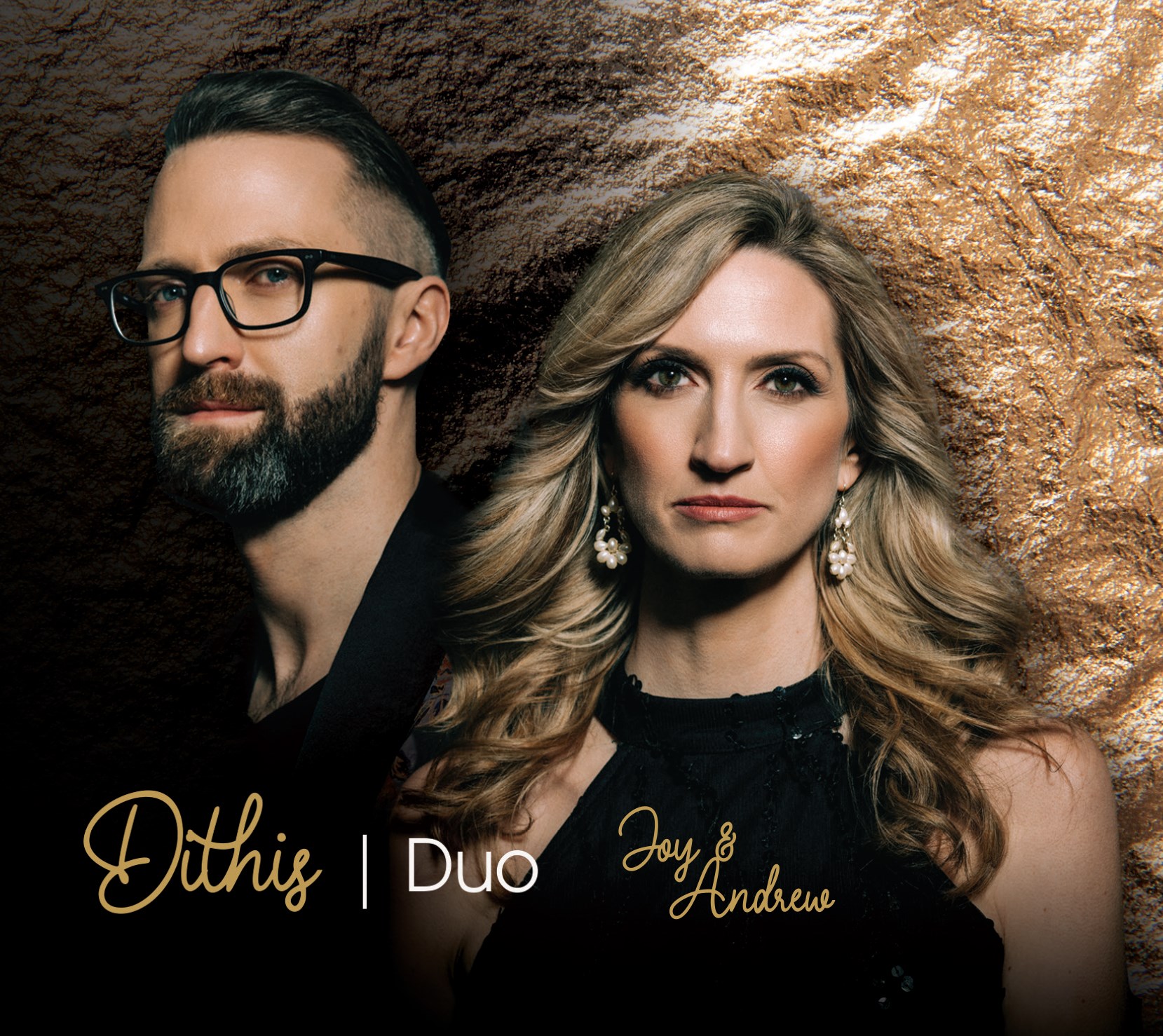
Scotland's Music: Joy and Andrew Dunlop: Dithis/Duo

Sister and brother Joy and Andrew Dunlop have been making music together since they were children growing up in Connel in Argyll in Scotland’s Western Highlands. Their musical interests led them on different paths, however. Joy’s deep love and curiosity for Gaelic culture led her to study at Sabhal Mòr Ostaig on the Isle of Skye. Andrew was drawn to classical music, studying at Manchester and receiving his doctorate from Eastman School of Music in New York. They’ve each created flourishing careers and received top awards and honours in their fields of music over the past decade.

They had not made a record together, though, and they decided it was time. For it, they set themselves a challenge.. “Despite Andrew and I having performed together for many years and having an extensive back catalogue, we actually chose to arrange and record repertoire that were new to us as a duo,” Joy said. As many musicians do “I’m constantly making lists of songs to learn,” she said. “When we decided to record an album together, I hauled out the lists and started singing through them. Since this wasn’t a themed album, I just chose songs that I loved to record on the album!”

The album is called Dithis/Duo. On it you will find quite a varied collection of song, told in English, Gaelic, and Scots.

Andrew’s work on the piano both supports Joy’s voice and carries the stories as well. It’s an intriguing combination.

Love of story is one of the through lines of the album. There’s a song based on testimony of a young woman who worked in the mines in 1842, one written for a priest who left his home in the Western Isles to serve in Ecuador, and another which comes from the perspective of man reflecting on the changes in his faith as he hears church bells ring, as well as one from a woman musing on motherhood. These are contemporary songs, written by Frank Higgins, Blair Douglas, David Francey, and Carol Ann Duffy and Esther Swift, respectively.

There’s a good helping of songs from the tradition, too. These include love stories from several perspectives, a set of puirt a beul, and a Robert Burns song.

“I like songs that tell stories - it doesn’t matter to me from whose viewpoint they are being told but there needs to be something there to which I can relate,” Joy said. “I love the story of A Mhairead Òg, where the man is heartbroken after accidentally killing his love, when his mother sent him out to hunt for ducks. We find out that it was also his mother who sent the girl that very pool to bathe and I always enjoy how the story unfolds in the song.”

One song that’s certainly not a love song. unless perhaps that comes in a young woman’s respect for her own dignity. is that one that comes from the mine worker’s words. “The lyrics are based on the actual testimony that Patience Kershaw of Halifax gave to the Children’s Employment Commission in 1842, by which time she had been working in the mines for over 6 years,” Joy said. “The dignity and understanding that she has for her terrible situation never fails to move me. This was actually a song that Andrew suggested trying, and I love it more and more every time that I sing it.”

I Wonder What’s Keeping My True Love Tonight is, like the tale in A Mhairead Òg, a story that shows up in many versions across the Celtic lands and their emigrant communities. The answer to that question comes in various forms too. Joy chose her favourite verses from several versions to tell the tale, and remarks that as a Gael, she was naturally drawn to the sadder one.

Also listen out especially for

Solas M’aigh/My Hope’s Light, an haunting and lovely song that evokes both loving a place and leaving it Saints and Sinners, David Francey’s song of distance and faith, which Joy says caught her attention when first she heard it. She and Andrew bring their own gifts to the quiet, thought provoking story.

Ae Fond Kiss. You will have heard this Robert Burns song before. Joy and Andrew add to the fine canon of Scottish artists who’ve taken it on and put their own stamp on it, offering some verses as Burns wrote them in Scots and some in Gaelic. In the sleeve notes you’ll find the full text of both versions if you wish.

Each of the eleven tracks is well worth repeated listening. You will no doubt find your own favourites.

What’s clear is that Joy and Andrew Dunlop are thoughtful creators in music, master storytellers both. They have joined their paths on record for the first time on Dithis. One would hope that there will be many more such creative collaborations yet to come

You may also wish to see
Joy and Andrew’s website
Joy focuses on songs from Argyll on her album Faileasan/Reflections
Hamish Napier’s album The River, where you’’ find more excellent, though quite different, piano creativity
Another excellnt, though again very different, album Gaelic song: Alterum from Julie Fowlis

-->Your support for Music Road is welcome and needed. If you are able to chip in, here is a way to do that, through PayPal. Note that you do not have to have a PayPal account to do this. Thank you.

Another way to support: you could Buy Me a Coffee at ko-fi.com

Labels: , , , , , , ,

Bookmark and Share
posted by Kerry Dexter at 0 Comments