Tuesday, April 08, 2025

Whirring Wings from Matt and Shannon Heaton

Musicians use all sorts of tools with which to tell their stories.

At times those tools include words. Other times, they do not.

There are always stories in the music, though.

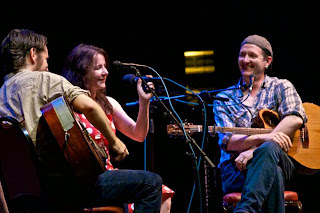
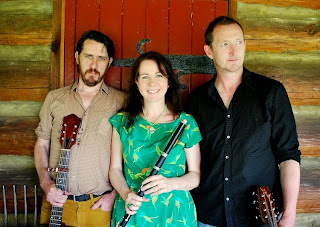
Matt and Shannon Heaton are songwriters, singers, instrumentalists and composers. They most often draw in the music of Ireland for traditional music to play and as inspiration for their original music.

The husband and wife duo are based in the Boston area.

Though they often choose a mix of elements for their recordings, for their album Whirring Wings, they’ve decided to place focus mainly on tunes, that is, instrumental pieces without words,

It makes a lively storytelling journey they invite listeners to join.

Matt’s main instrument is guitar, Shannon’s is flute.

For this album they take journeys through original and traditional tunes in thoughtful combinations and sequencing.

The title for the album, Shannon explains, comes from the one song they have chosen to include, a piece by Scottish poet Robert Burns.

Shannon sings lead. It is called Westlin Winfs (the song is known by several other names too). The story it tells has to do with autumn, hunting, a lovers walk, and other things, including the whirring wings of birds.

Matt and Shannon took that reference to whirring wings, Shannon explains, “as an invitation to find some lift and freedom in some of our very favorite old and new tunes, and to try our best to convey the way these tunes make us feel by arranging them with sparkle and space.”

Among the stories the tunes and sets tell are a waltz to recall their son’s last days of fourth grade, a march to remeber and honor a musician who had passed away and her twin sister, inspired by a visit of two cardinals to their backyard, and a set that starts with a tune Matt and Shannon were inspired to learn by requests from members of the the community which has developed around the couple’s onine Virtual Guided Session (known as VGS for short).

There’s a full slate more, both original and traditional tunes in jig, reel, walyz, and march time. There are slips jgs and an hornpipe in the mix, too, alongside that song from Robert Burns.

Whirring Wings is a project well worth your repeated listening. Whetjer you listen to learn the tunes, to appreciate the musician ship, or to explore great flute and guitar work, you will find much to enjoy.

There’s a tune book available also, with notation, guitar chord ideas, and short essays about the songs. Both album and tune book include an intriguing and thoughtful cover painting by artist Vincent Crotty.

You may also wish to see
A bit of backstory on Two Cardinals as part of the Sunday Sessiosn series
Matt and Shannon Heaton offer quite a bit of instructional and educational Irish music content on line - including archives and live broadcasts of that Virtual Guided Session, on Shannon’s YouTube Channel
This is the sixth album Matt and Shannon have released as a duo. Tell You In Earnest is another; so is Fine Winter's Night You can hear each of them sing, too, on these albums...
They each have other projects on the go, too. Matt has several albums focused on younger listeners; Shannon has a solo album and [ast episodes of her podcast Irish Music Stories. More about all this at Matt and Shannon Heaton's web site
Another Irish American musician whose work you may enjoy: learn about the album Through Wind and Rain from Cathie Ryan

-->A way to support Music Road,
through PayPal. Note that you do not have to have a PayPal account to do this.

Another way to support: you could Buy Me a Coffee at ko-fi.com

If you enjoy what you are reading here, check out my newsletter at Substack for more stories about music, the people who make it, and the places which inspire it.

Labels: , , , ,

Bookmark and Share
posted by Kerry Dexter at 0 Comments

Tuesday, July 11, 2023

Shorelines: Nuala Kennedy

The sea has been a constant in Nuala Kennedy’s life. She grew up and first began learning music in County Louth in Ireland’s east, not far from the Irish Sea. She has lived and traveled in other parts of the world with sea connections, from Scotland to Cape Breton to Spain to Australia and beyond.

In recent years Kennedy has been based near the coast of Clare, in the west of Ireland.

That sea connected life has presence in Kennedy’s album Shorelines.

The music on Shorelines tells stories of the sea, and draws on sea changes to tell human stories. So too the music, especially the songs, on Shorelines, offer stories of changes and of resilience in women’s lives.

As she was making those sea borne connections and choosing music for Shorelines, Kennedy was reflecting on her own life as woman, artist, wife, mother, and friend, and how changing circumstances require change. That had her considering the many ways resilience comes about in women’s lives That perspective too informs the music on Shorelines.

Shorelines is a title which reflects the shifts and changes in both coastal waters and the resilience of women. It is journey with a fine balance in tune and in song of original music and music drawn from traditional and contemporary sources.

Drawn from is one of the operative phrases, as Kennedy and the talented folk she’s invited along on this journey stay true to tradition while adding their own gifts to illuminate the stories they wish to tell.

Kennedy is a flute and whistle player, a singer, composer, and producer. Each of those aspects of her talent comes through clearly in Shorelines.

You will be well rewarded by following the path Kennedy has laid down through the nine tracks on the album, most of which are sets with tune and song in combination or comprising several tunes.

Several highlights:

The journey begins with the song Sally Sits Weeping, which finds a woman lamenting a false lover. Melody and variations of the verses have shown up in Ireland, Scotland, Australia, and North America; Kennedy has chosen a story which finds the woman weeping, true, but as the tale unfolds she “sets sails of silver” and heads in other directions.

On the recording this moves into Blue Devils’ Jig a lively original tune named for the melancholy Ishmael falls into in Moby Dick.

Saltwater and Flow are two lively original tunes which move gracefully into the song Cúcúín, sung in Irish. It’s a song Kennedy says that she often sings to her own young children, in which there’s a conversation between a mother cuckoo and her chicks. There’s another dimension, which aligns with aligns with the ideas that pull through the music on Shorelines. “In the Celtic tradition,” she points out, “cuckoos were considered to have toe ability to travel between worlds.”

Wake is an original tune “composed while meditating on the wake of a boat,” Kennedy writes. It is a reflective piece which points up her gentle power with the flute and the connections the musicians who join her bring as well, in this case especially Tara Breen on fiddle and Caoiminh Vallely on piano.

They move from Wake into a lively set called Sea Reels with original tunes inspired by Cape Breton bracketing a Scottish maritime reel, with Tony Byrne on guitar and Todd Sickafoose on double bass joining in.

Marguerite is a song which also references Atlantic Canada. Contemporary writer Scott Richardson drew on a true story from Newfoundland in 1542, which speaks of a woman facing circumstances which certainly tested her resilience.

Kennedy mentions that she first heard this song from Geraldine Hollett of the Newfoundland band The Once. That is how I first heard it as well. Kennedy brings her own gifts as a singer and storyteller to the tale, adding her own illumination to the powerful story. It also fits well with the intertwined themes of sea borne stories and ideas of resilience on Shorelines.

When you get to thinking about it, the story told in The Cavan Road leaves many things unexplained. It clearly has a happy ending though, which is why legendary flute player and singer Cathal McConnell taught it to Kennedy some years back when she asked for a song with just such an ending -- a rare thing in Irish love songs.

In addition to the musicians mentioned above, Moira Smiley and Muireann Nic Amhlaoibh, two artists whose work you’ve met here along the Music Road before, add subtle, interesting backing vocals to several of the songs.

There is more to explore, including a song suggested by Mick Moloney, an open ended version of a ‘died for love’ song, and tunes inspired by the coast of Clare.

Each of the tracks on Shorelines is worth your repeated listening. There’s more to discover each time in song, tune, and story, all offerd with top class musicianship.

You may also wish to see
Nuala Kennedy’s website, with details of her other recordings and her tour and teaching schedule
A short piece about one of Nuala’s earlier albums, The New Shoes
Learn about Day Is Come from The Alt, a trio in which Nuala joins up with John Doyle and Eamon O’Leary
Thar Toinn/Seaborne from Muireann Nic Amhlaoibh
Another one of those rare Irish love songs with happy ending, Carrick a Rede from Cathie Ryan and John Doyle
Learn a bit about the music of The Once, from Newfoundland

Photographs courtesy of the artist

-->Music Road is reader supported . Your support for Music Road is welcome and needed. If you are able to chip in, here is a way to do that, through PayPal. Note that you do not have to have a PayPal account to do this. Thank you.

You can also Buy Me a Coffee at ko-fi.com .

Labels: , , , , , ,

Bookmark and Share
posted by Kerry Dexter at 0 Comments

Wednesday, March 01, 2023

The long story: music across time

Music connects us to each other.

It can also be a way to connet across time and place.

These images may help you think about this. You may also want to listen to the music on
Thar Toinn/Seaborne from Muireann Nic Amhlaoibh
The Farthest Wave from Cathie Ryan
Alterum from Julie Fowlis
Dialogues from Su-a Lee
The Woods from Hamish Napier

It has been a bit quiet here of late; there will be more say about upcoming and current projects coming along.

In the meanwhile, have a look and listen to those stories and albums noted above, and take a look throught the archives here at Music Road too. A good lot of music and ideas to explore within.

Enjoy what you are finding at Music Road? You could Buy Me a Coffee at ko-fi.com Thank you!

Labels: , , , , , , , ,

Bookmark and Share
posted by Kerry Dexter at 0 Comments

Saturday, March 05, 2022

Ireland's music: Day Is Come from The Alt

Stories told through song: that is one thing the three musician who are the trio The Alt love and have in common.

They are great at telling stories through tunes -- music with no words-- as well.

As well they should be, as each of the three musicians -- John Doyle, Nuala Kennedy, and Eamon O’Leary -- have flourishing careers with other music projects. They also like the music and sound the create when they have the chance to get together. Hence, The Alt.

Day Is Come is their second recording together. On it, you will find a lively journey of song in both English and Irish, along with class tunes, some original and some drawn from traditional sources.

All three sing, and well know how to handle lead voice as well as support others. O’Leary plays bouzouki and harmonium on the recording, Doyle adds his own touch on bouzouki as well as playing guitar, mandola, keyboards, and bodhran, and Kennedy plays whistles and flutes. Guest fiddlers Marius Pibaret and Kevin Burke sit on several tracks.

Each of the ten tracks on the album is well worth repeated listening, as is the story as the artists have sequenced it. That said, several to listen out for especially include

Ta Na La/Day Is Come is an Irish language song, a cheerful drinking song at that. The trio offer it in a version known in Oriel, the ancient medieval area on the east coast of Ireland of which Nuala’s home town of Dundalk is part. As is fitting for that, Nuala’s light and lively voice leads the vocals after a short intro on the flute. The men join in on the choruses and their strings add sparkle to the vocals and join the flute for instrumental breaks framing the verses.
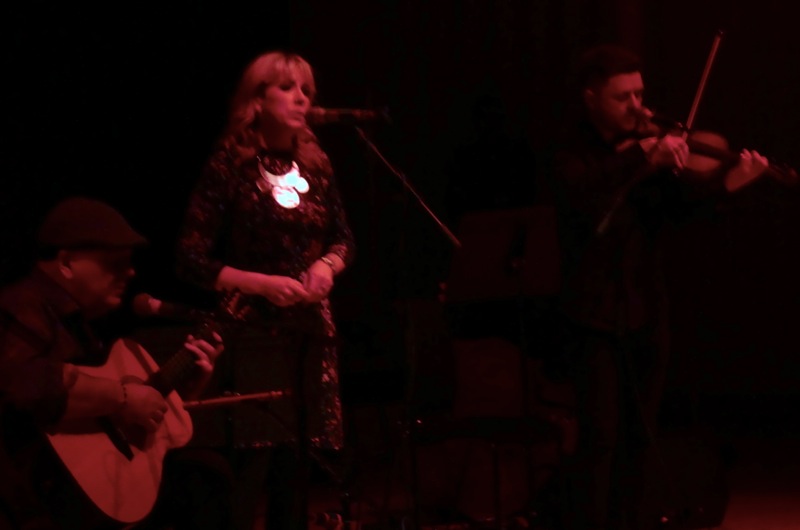
For the The Willow Tree, O’Leary takes lead voice. It’s a song in English by the scholar, singer, and songwriter Padraigin Ni Uallachain, whose music you have met here along the Music Road several times. It’s a reflective love song grounded in Irish landscape, which sounds as though it could have come from centuries back rather than being a contemporary piece. Harmonium and guitar weave a journey around O’Leary’s warm baritone and the graceful backing of Doyle’s tenor and Kennedy’s soprano. Kevin Burke joins on fiddle.

The Connaught Rangers has lyrics from a poem by Winifred M. Letts, set to music composed by John Doyle. The three musicians sing unaccompanied, with John’s strong tenor taking lead on lyrics which are a lament for those from Ireland who served in World War I. It is a fine way to hear just how good their harmonies are, and how well the three musicians work together.

You’ll do well to listen to each of the other tracks as well, which include a lively song in Irish which Nuala often sings to her young children, fine harmonies from Nuala and John backing Eamon’s lead on Paddy’s Land along with great playing from all three, two sets of tunes which mix originals from Kennedy and Doyle with tunes from the tradition, and a great version of the Child ballad Flower of Northumberland with Nuala on lead.

Day Is Come has no shortage of lively music, but through all that there’s a reflective, feeing, somewhat quieter in feeling than their first album. That John Doyle, Eamon O’Leary, and Nuala Kennedy created this outstanding collaboration during constraints on travel and connection is testament to their resilience and creativity as well as their musicianship.

Day Is Come is lasting music, with music to tap your feet or step along to,, to sing with, to enjoy quietly. Stories of Ireland well told in music indeed

You may also wish to see
Songs of the Scribe from Padraigin Ni Uallachain
The Path of Stones from John Doyle
The Alt, the trio’s first album, self titled
A bit about Nuala Kennedy’s album Behave the Bravest along with three other albums you may enjoy...

-->Music Road is reader supported . Your support for Music Road is welcome and needed. If you are able to chip in, here is a way to do that, through PayPal. Note that you do not have to have a PayPal account to do this. Thank you.

Another way to support: you could Buy Me a Coffee at ko-fi.com

If you enjoy what you are reading here, check out my newsletter at Substack for more stories about music, the people who make it and the places which inspire it.

Labels: , , , , , , , , , , ,

Bookmark and Share
posted by Kerry Dexter at 0 Comments

Monday, November 02, 2020

Three from Scotland: Music without words

Music has so many aspects: harmony, melody, all the instruments with their sounds, all the singers with their voices and how they convey the words.

There are times, as well, when music speaks most clearly when there are no words. It is not that words get in the way. It’s just a different conversation, or, if you will, another way of speaking about an idea.

Marie Fielding, Kevin Henderson, Neil Perlman, David Foley. and Jack Smedley have conversations in music to share that re well worth your listening.

Marie Fielding’s instruments are fiddle, five string fiddle, and hardanger fiddle. With them, she traces journeys to places which have inspired her. Mayo2Manchester honours both her Irish ancestors and her connection to flute player Michael McGoldrick as mentor and composer. The Connemara Reel Set comprises three original tunes evoking and honoring both Scotland and Ireland.

There’s the quiet of Gracie’s Lullaby, and the lively Muriel’s Oatcakes set. Most of the tunes are of Fielding’s own composition, and almost all of the tracks were recorded, as she writes in her sleeve note, “in the moment,” with just a few carefully noted touches added later on. The tunes are bookended by the title track Spectrum and Spectrum Outro, flowing tunes which are intended to highlight the circular flow of ideas in Fielding’s choices.

Immersed in traditional music from any early age, Fielding has a long understanding and a long time of thinking about the tradition to draw on in creating her own music,

A lecturer in Fiddle and Performance at the Royal Conservatoire of Scotland in Glasgow, Fielding has a confident and distinctive mastery of her medium. She is also a visual artist andsome of that sort of connection with the listener comes through in her music on The Spectrum Project as well.

Kevin Henderson, who comes from Shetland, and Neil Pearlman who is from New England by way of Atlantic Canada, know well how to explore landscapes through their instruments. In Henderson’s case that’s the fiddle. For Pearlman it’s keyboards and mandolin.

It’s a contrast and blending of styles and backgrounds that works. Their album is called Burden Lake. Henderson’s fiddle playing is precise, clear, and draws on his Shetland and Nordic background. Pearman’s inventive style, influenced perhaps by his Cape Breton fiddle piano duo history as well as his background studying and playing jazz, makes both subtle and generous compliment to the fiddle lines. Many of the pieces are of Henderson’s composition, and there are several from Pearlman and a traditional one. The duo handles both fast paced and quieter tunes with equal grace and interest. Listen out especially for Da Trowie Burn, the San Simon set, and Liam’s.

Also listen out for their other work. Each always has several projects on the go. among them the Nordic Fiddlers Bloc for Kevin Henderson and The Katie McNally Trio for Neil Pearlman. Both of these groups have new recordings upcoming.

David Foley and Jack Smedley have an ongoing group commitment: both are members to the award winning Scottish band RURA, founding members in fact. Foley, who plays flute, and Smedley, whose instrument is fiddle, enjoy the challenge that such collaboration presents, but they have also had the wish to play tunes in a more intimate way. They were invited to perform a duo gig at Celtic Connections in 2018.

The idea that has become their album Time to Fly was planted then, but their duo collabration has also been a long time growing. “With RURA we have been lucky enough to play big festival stage across the world and it is these experiences, alongside the travel opportunities that these performances allow, that have inspired a lot of the work on Tine to Fly,” David Foley says. “This album has been a great opportunity to get back to the fundamentals of our musicianship and explore the stripped back, acoustic sound we can created when it is just us and the instruments.”

Explore they do, with tunes both driving and lyrical. They well know how to do this, too. Jack Smedley comes from Cullen, where he grew up immersed in traditional fiddle music of the northeast of Scotland and of the Highlands. David Foley grew up in and around the Irish music scene in Glasgow. They met as students at the Royal Conservatoire of Scotland before stepping up to help found RURA.

These varied strands of background and present interests inform the eleven sets they have chosen for Time to Fly. The title track honours the fact that though Jack and David have been studying and then playing together for more than a dozen years now, first at RCS and then as members of RURA, this is their debut album as a duo.

Through eleven tracks Jack and David lead a journey which travels from a quiet tune coming from a story from history that took place on the shore near Cullen where Jack grew up to a lively set that begins with tune inspired during the recording of the album by a microphone, a piece of metal, and...a hacksaw.

The music Foley and Smedley offer along the way is intricate and engaging. Each track is complete on its own, while at the same time creating a progression that leaves you looking forward to what will come next. All of it is original music by one or the other of the duo, as well as one track Drift, which they wrote together. Their longtime connection with musical tradition and their enjoyment of making music together come across clearly through all of the tracks. Joining the duo on the journey are long time musical colleagues and friends John Lowrie on drums, James Lindsay on double bass, and Jenn Butterworth on guitar.

With or without words, music speaks clearly. Give a listen to these three recordings -- give more than one listening -- and you will find many engaging paths to follow.

You may also wish to see
Katie McNally Trio: The Boston States
Music from Ireland & Scotland: Sitting in on the Session
Homecoming: A Scottish Fanatasy from Nicola Benedetti
Hope as a companion: music for the journey at Wandering Educators -- a performance video from Time to Fly is part of this story
Sarah Jane Summers: Solo more music without words to explore

-->Your support for Music Road is welcome and needed. If you are able to chip in, here is a way to do that, through PayPal. Note that you do not have to have a PayPal account to do this. Thank you.

You can also Buy Me a Coffee at ko-fi.com

Labels: , , , , , , ,

Bookmark and Share
posted by Kerry Dexter at 0 Comments

Sunday, September 27, 2020

Ireland's Music: Thar Toinn/ Seaborne from Muireann Nic Amhlaoibh

The sea, especially the sea in the west of Ireland, has always been part of Muireann Nic Amhlaoibh’s life. So has Gaelic. Music has, as well. It is natural, then then that she should bring these things together in her six song project Thar Toinn/Seaborne.

Nic Amhlaoibh plays flutes and whistles, and sings. Those are talents she often put to use in her thirteen years as lead singer with the top traditional band Danu, and in collaboration with other artists as well. She has traveled the world with her music. but it is to west Kerry, to the Dingle peninsula, that she returned to build her own career as a solo artist, and to raise her family.

For all that it is somewhat shorter than a full album, Nic Amhlaoibh makes the most of that concentrated form. There are stories told in Irish and in English, as well as one in Scottish Gaelic, with narratives drawn from truth, legend, and maybe a bit of both. The arrangements serve to enhance Nic Amhlaoibh’s choices in how she presents the lyrics. She has one of the best voices around, and that’s illuminated with a musical and poetic intelligence which makes her performances last well beyond first hearing. All that is present as part of what’s going on here.

One of Nic Amhloaibh’s gifts is saying much by saying little, in both story and style. That holds true whether she is telling a story of a faithless lover in Blackwaterside, venturing into Scottish Gaelic to sing a Cape Breton song of a woman whose sweetheart is lost on the sea, offering a west Kerry song wishing good luck and safe home to fisher folk, or telling a story of looking back at a well loved place in Ireland which may have been written by a man who survived the sinking of the Titanic.

Nic Amhlaoibh bookends these pieces with a song written by a friend who was both poet and boatman, and a song which may have come across the water from the singing of fairies.

The opener to Thar Toinn is Faoiseamh Faoistine, with words written by Danny Sheehy and music from Gerry O’Beirne. The song urges and encourages the listener to connect with land and sea. As Nic Amhlaoibh writes in her sleeve notes, Sheehy’s words also encourage listener to seek solace there.

Many years ago, a fisherman from the Blasket Islands heard the music of Port Na Bpucai one night while out on the sea. Perhaps it was wind, perhaps whale song, but then again, those fairies... it is after all a story fo a woman taken across the sea by fairies. It is also the song from which the title of the album comes.

For this arrangement of Port Na Bpucai Nic Amhlaoibh is joined by Billy Mag Fhlionn, who plays the Yaybahar, an acoustic instrument with which adds an otherworldly sound fitting for the song’s story. Mag Fhlionn built the Yaybahar himself after a concept by Gorkem Sen.

Others join in to support Nic Amhlaoibh through the album, too. Scottish singer Julie Fowlis adds her voice to the Cape Breton song,. Among others who sit in are Donal O’Connor, Gerry O’Beirne, Niamh Varian-Berry, and Donogh Hennessy.

It is, however, Muireann Nic Amhlaoibh’s voice, vision, and connection with the waters which center Thar Toinn/Seaborne. It is a gathering of songs which invite repeated listening to explore the many facets of that vision and connection.

You may also wish to see
Seeing Ireland: 3 Music videos
Foxglove and Fuschia, another album from Muireann Nic Amhlaoibh
About the album Buan from Danu
About the album Alterum from Julie Fowlis.

A way to support Music Road: you could Buy Me a Coffee at ko-fi.com

If you enjoy what you are reading here, check out my newsletter at Substack for more stories about music, the people who make it and the places which inspire it.

Labels: , , , , , , , , , , ,

Bookmark and Share
posted by Kerry Dexter at 0 Comments

Sunday, March 31, 2019

Ireland's Music: Cherish the Ladies Heart of the Home

Joy and sorrow, light and shadow, tears and laughter: al these find their places in the music of Ireland. Indeed, you might say that songs and tunes and stories which bring all these in are the substance of Ireland’s music.

A fine place to hear this on the recording Heart of the Home, from Cherish the Ladies.

Heart of the Home opens with a set of tunes composed by flute player Joanie Madden to honor her father’s home town in East Galway. The Portumna Workhouse tells a tale without words of reflection on the darker side of things during the famine years, while the The Hurling Boys of Portumna takes a lively an lighter tack, It is for, Madden said “All those might men who brought tremendous glory to the town through sport.”

Singer and guitarist Kate Purcell, from Clare, steps in to join the band for the song Glenties. An image filled reflection on a small town in Donegal, it was written by musician Maurice McGroth while he was staying in the town. Purcell and the band combine for a graceful, atmospheric performance which is one of the standouts on the recording. Listen out especially for Nollaig Casey’s fiddle as the band backs Purcell on this track.

Cherish is a class act: Heart of the Home is their seventeenth album. More than than thirty years ago, Joanie Madden, who plays flutes and whistles, and Mary Coogan, whose instruments are guitar, bouzouki, and banjo, were founding members of the band. Joining them these days are Mirella Murray on accordion, Kathleen Boyle on piano, and Nollaig Casey on fiddle. In performance and on record they often invite guests to join in.

As you might suppose from the title, the idea of home and well loved places runs through the music chosen for this recording. Another highlight of Heart of the Home is Ambletown, the song of a seafaring man longing for home. That home, in the song, is in the north country, so it is fitting that the Ennis Sisters, who come from Newfoundland in Atlantic Canada, join in as the voices.

Ways of thinking about home take twists and turns. Kathleen Boyle joins a Turlough O’Carolan piece with a tune she wrote for some of her former students in The Murphy Boys set. The Letty from Cavan set includes a tune Madden wrote for her neighbors along with tune fro Ed Reavy and Martin Mulhaire, both Irish musicians who emigrated to the United States. There are several sets with tunes the women found in Irish tune books from the nineteenth century which allow them to have great times telling stories as their instruments converse with each other. Farewell to the Catskills is a lyrical tune Madden wrote about a place in New York state which has often welcomed people with ties to Ireland. Galway balladeer Don Stiffe steps in to sing Shadow of a Singer and his Song, in which songwriter Dermot Henry looks back at the changes and challenges of his early days in music, finding among hardships a sense of home in the connection between performer and audience.

There is the title track, Heart of the Home, written by Andy M. Stewart. Not long before he passed away, songwriter Stewart suggested that this would be a good piece of Cherish the Ladies to take on, and indeed they did, inviting Irish country singer Nathan Carter to sing the lyrics for the recording and the video. On tour, Purcell often sings the lead; they each add distinctive presence to the song, with the instruments from the band weaving in and out an through their singing.

When Cherish began, there were very few well known Irish women musicians. A whole band of top class women musicians? That was unheard of. Cherish the Ladies did, however, make themselves heard. Through the years they have played with top class musicians from symphony orchestras to country musicians to the best in Irish music. Time in Cherish has been part of the careers of many top class musicians as well, among them, fiddler Eileen Ivers, dancer Jean Butler, singers and songwriters Cathie Ryan and Heidi Talbot, and singer Aoife Clancy.

Heart of the Home is a fine next step of Cherish the Ladies. If you know their work you will certainly want it; if you’ve not yet met them, this is a fine place to make their acquaintance. They tour extensively, too . As the music on Heart of the Home suggests, you will certainly enjoy seeking out the chance to see Cherish the Ladies in performance.

Photographs oby Kerry Dexter, made at the Celtic Connections Festival In Glasgow, with the permission of the artists, the festival, and the venue.

You may also wish to see
Eileen Ivers Beyond the Bog Road.
Cathie Ryan Through Wind & Rain
Cherish the Ladies storytellers in music, which talks about their winter holiday albums

Your support for Music Road is welcome and needed. If you are able to chip in,
here is a way to do that, through PayPal. Note that you do not have to have a PayPal account to do this. Thank you.

Another way to offer support, you could Buy Me a Coffee at ko-fi.com

Labels: , , , , , , , , , , ,

Bookmark and Share
posted by Kerry Dexter at 0 Comments

Wednesday, July 04, 2018

Scotland's Music: Hamish Napier: The River

Rivers were some of the earliest ways people traveled, connected, and explored. They were also, quite possibly, part of the first music people heard, and made. These aspects of rivers have held true through history, and still do today.

Hamish Napier grew up alongside a river, the Spey, in northern Scotland. His family fished explored and traveled the Spey, and its music formed the background to Hamish’s learning on the instruments he’d make his own, flute and piano. 

Hamish is a well respected player, composer, and teacher who has worked with many of Scotland’s top musicians, some of whom you’ve met here along the Music Road, among them Karen Matheson, Emily Smith, and Eddi Reader.

A few years back he was commissioned to compose an hour of music as part of the New Voices strand at Celtic Connections. Others who have been asked to compose for that well respected strand include Nuala Kennedy, Hannah Fisher, Maireard Green, and Sarah-Jane Summers.    

Hamish turned to his past and present experiences of the River Spey for ideas, creating the music which would become the recording called The River. . These ideas he framed in a range of traditional music – reel, jig, strathspey, slow air, and more – weaving his ideas about aspects of the river’s voice and history to create a new story which becomes lasting.


That new story is drawn from traditions of the music of Scotland, and traditions, both of nature and man made, along the river.    

If you’ve ever seen a water bug dart above flowing water, you will appreciate The Mayfly. With the tune called The Dance, Napier reflects on the changes in ways a river flows, and the connections it makes as it does so. In the sleeve notes for The River he remarks that “The natural cycle of the river is one epic, glorious and ever changing dance… everything around us is interconnected and flowing.”  

Flute, piano, and keyboards are how Hamish Napier speaks about this this dance, from whirlpools to the story of floating down the river now and in the past, from the sweep if the Spey’s course to the small conversations of those humans who are part of its life.

There is light (listen out for the tune called Huy Huy, and the vigorous dance of the salmon in Out to Sea) and there is shadow in life along and within the Spey, as well.

Napier takes account of the shadow side especially through two tunes. The Drowning of the Silver Brothers, 1933, which was inspired by a somewhat mysterious tragedy, and Iasgairean nan Neanhnaid (The Pearlfishers). The second of those is in the form of a . warning pibroch – a piper’s warning call. The idea came both from a childhood experience of encountering those who were making destructive raids on the river’s freshwater mussel beds to take their pearls, and, some years further on, considering what effects pollution may be having on the river.  

The eleven tracks on The River . draw to a close with two pieces which in various ways bring together the stories and the music Napier creates of the journey. There’s the lively Speycast (Part 1) through which you can well imagine the arc of fly casting on the Spey – particularly as one needs to take into account not snagging one’s line on the trees growing along its banks. Spey Cast (Part 2) bursts into joyous celebration of a lively and lighthearted raft race that takes place on the Spey.


As creator and composer, Napier has well chosen his companions on this river journey. Sarah Hayes adds alto flute, James Lindsay plays double bass, Martin O'Neill is on bodhran, Andrea Gobbi does synths and post-production, and Calum MacCrimmon, rather than playing the pipes as he often does, in this case sings Canntaireachd as part of that warning pibroch of The Pearlfishers. Natural sounds oystercatchers, blackbirds, curlews, heron, and the River Spey itself also take part. Classy, intricate artwork and the design of the album come from Somhairle MacDonald.        

You could enjoy these pieces  knowing nothing of the River Spey and the landscape in the north east of Scotland which frames it – but the stories Hamish Napier has has chosen to tell through his instruments will draw you into the land and the life of and along this river, and, perhaps, enlarge your vision of other rivers and watersides you may encounter.    

Hamish Napier has been working on another recording project since The River was released. It also has to do with life in the northeast of Scotland, but in a rather different way: it is called The Railway . The Railway and at this writing is planned to be released in August. I hope to bring you more about that recording then – meanwhile, here is more about The Railway ..

Photos by Peter Trimming and Kerry Dexter  

You may also wish to see  
Scotland’s Music: Emily Smith: Echoes .
Ainie Minogue: In the Name of Stillness .
Julie Fowlis: Alterum .      

A way to support Music Road: you could Buy Me a Coffee at ko-fi.com

If you enjoy what you are reading here, I've recently begun publishing an occasional newsletter at Substack with more stories about music, the people who make it, and the places which inspire it. Come visit and check it out!

Labels: , , , , , ,

Bookmark and Share
posted by Kerry Dexter at 0 Comments

Wednesday, March 28, 2018

Ireland's Music: Murieann Nic Amhlaoibh: Foxglove & Fuschia

As she was planning the project which would become her album Foxglove & Fuschia, Muireann Nic Amhlaoibh decided she wanted the music to be a bit like what she might do if she were planning for a gig in a pub near her home in Corca Duibhne, the Dingle peninsula, in the west of Ireland. It’s a situation she knows well, as she grew up in Dingle, surrounded by music and going to sessions from a young age.

As ancient stones and worn paths through mountain and along coast attest, people have been calling the Dingle peninsula in the west of Ireland home for thousands upon thousands of years. Rain and mist and wind, mountain and sea meet in a landscapes that suggests and evokes history and story.

Those stories are often told, shared, and forged through music.

Muireann Nic Amhlaoibh has studied in Dublin, taught in LImerick, and traveled the world with her music. For thirteen years she was lead singer and flute player with the top Irish band Danu. I came time, though, to return to to her native west Kerry, to live again in the Irish speaking region of the far west of Dingle where she herself had grown up and begun her life in music,

She also thought at the time that stepping away from Danu might be the end of her public career as a musician. It wasn’t.

/>

A sure and steady vision of where she is and what she wishes to create as an artist is at the heart of Foxglove & Fuschia, which is Nic Amhlaoibh’s third solo album. There are songs in English and in Irish, and a few well chosen tune sets too.

Some of the music has its origin in west Kerry. Other songs and stories make their way in from father afield. They all, though, relate in some way to that life of water and mist, music and mountain and story found in Dingle.

There is the gentle joy of word and lyric in Muirisin Deas is Nora, a song from The Great Blasket Island, which lies just to the west of the tip of Dingle. It is about a couple who have been married a long time and are still very much in love. The words in Irish are from a traditional poem, set to a new melody by guitarist Gerry O’ Beirne. O’Beirne, who often plays with Nic Amhloaibh when she goes on the road with her music, supports her on the song for the recording.He also wrote the image filled song Where Foxglove, from which Nic Amhlaoibh drew the title for the recording.

For most pieces on Foxglove & Fuschia, there are just one two musicians joining Nic Amhlaoibh. That still leaves good scope for family and friends to sit in, though: there’s a set of reels with Nic Amhlaoibh’s husband Billy Mag Fhlionn on bouzouki and a friend from her days with Danu, Donnchadh Gough, on bodhran, and on a set of polkas with her father, Feargal MacAmhlaoibh, as the fiddler, and with longtime friends, Padraig O se on accordion and Donough Hennessey on guitars. Donal O’Connor, Seamus Begley, Pauline Sclanlon. Eilis Kennedy and John McSherry are among those who sit in on various tracks, too.

It is Nic Amhlaoibh’s voice and vision which define what’s happening on the album, though. Nowhere is that more evident than on The Final Trawl, a song of the sea by Scotland’s Archie Fisher. As part of her working co presenting the television programme Port for BBC Alba with Scottish singer Julie Fowlis, Nic Amhlaoibh had the chance to meet and sing with Fisher, who wrote the song with ideas and images drawn from his experience of seafaring.

Another song that weaves together the album’s ideas is Bean Dubh an Ghleanna. It is Nic Amhlaoibh says, one of the big songs which to her mind make up the classical tradition of Ireland’s folk music. Nic Amhlaoibh grew up in Dingle, in the Gaeltacht, where, she points out, you don’t actually study the traditional style of sean nos, you’re given the words and the melody and expected to find your own way into them.

Indeed, so she has, through each of the tracks on the recording. There are eleven of them, and each invites repeated listening. Tune, song, and story shared in ways which honor tradition and create it anew in one of Ireland’s most interesting and creative voices: this is what you will find on Foxglove & Fuschia.

Photographs of Muireann Nic Amhlaoibh and friends in concert at Celtic Connections in Glasgow, Scotland, by Kerry Dexter, made by permission of the artists, the festival, and the venue. Thank you for respecting copyright

You may also wish to see
Muireann Nic Amhlaoibh & Julie Fowlis: Dual
Musireann Nic Amhlaoibh: The Small Hours
Muireann Nic Amhlaoibh’s web site
Cathie Ryan: Through Wind & Rain

-->Your support for the work,here at Music Road is welcome and needed.
Here is one way to offer that, through PayPal. Note that you do not have to have a PayPal account to do this. Thank you.

Another way to support: you could Buy Me a Coffee at ko-fi.com

Labels: , , , , , , , , , , , , , ,

Bookmark and Share
posted by Kerry Dexter at 0 Comments

Sunday, March 06, 2016

Ireland's Music: four albums to explore

The island of Ireland is a small place, really. For all that, it has landscape both dramatic -- think the Slieve League, Bloody Foreland, the Cliffs of Moher -- and quiet, such as the countryside near Saul where Saint Patrick walked, the green fields of Monaghan, and the backroads of County Louth. There are lively cities and quiet towns, winding roads and mountains wrapped in mist. Condensed into two countries and one small island, these are aspects of landscape that call forth dreaming, connecting, and creating. This is part of the reason Ireland is known as the land of saints of scholars -- and of musicians.

As you might be thinking about, dreaming of, or making your own way across the landscapes of Ireland, here is music you will want to include in your soundtrack for such a visit, whether you travel through geography, memory, or imagination:

The members of the band Danu take in quite a few places in Ireland in their own geography: musicians come from east and west and north and south of the country. So do the songs they have chosen for the album Buan. The word means lasting in Irish, an right enough title for a recording that among other things is meant to celebrate twenty years since Danu began. There are waltzes, marches, hornpipes, and reels, and songs aplenty too, with words in both English and Irish. There is music from the tradition and music newly composed, some of that from Danu’s own folk. Listen out especially for Donal Clancy singing the outlaw ballad Willie Crotty that tells a story of times past that resonates with today’s events, Muireann Nic Amhlaoibh with John Spillane’s powerful emigration song passage West, and the whole of the band on the slides and reels that make up the Kerry to Donegal set.

The musicians of Altan are well grounded in the music and landscape of their home place of Donegal in Ireland’s far northwest. They have delighted audiences from Asia to Austraila with it, and for their album The Widening Gyre they decided to explore the connections of their music with the the music of the mountain south in the United States. That’s an interesting journey, with song and tune that draw on both of those traditions and on what connects them. There’s a set beginning with Buffalo Girls from the bluegrass side of things and taking a fast paced path to the fiery fiddle style of Donegal, a set which the the musicians say evolved from them sitting around swapping tunes in the studio. Plenty of American folk musician guests on the album, which was recorded at Compass Records studio in Nashville, among them Mary Chapin Carpenter, Bruce Molsky and Alison Brown. It is Altan’s sound which anchors the vision, though. For a fine example of that check out Altan founder, fiddle player and singer Mairéad Ní Mhaonaigh’s duet with bluegrass master time O’Brien on Gypsy Davey/The House Carpenter.

Speaking of vision, the one singer and flute player Nuala Kennedy had for her album Behave the Bravest was to include quite a bit of music sourced from areas near where she grew up, Dundalk in County Louth in the east of Ireland. The ten tracks on the recording offer that, with a fine balance of song and tune, and Kennedy also lets in hints of her travels with her music and longtime residence in Scotland along the way. Listen out especially for the Fair Hill of Killen, a love song in Irish with lyrics by Ulster poet Peadar O’Doirnin, the emigration song Lovely Armoy, and the set of reels which begins with The Glen Where the Deer Is.

Cathie Ryan sources the songs she writes and the songs she chooses from contemporary and traditional sources in light of her heritage as the first generation daughter of parents who came from Ireland to America, and in light of her own path as an adult which has seen her live for years in the United States and equally years in Ireland. That dual respect is evident in the music on her album Through Wind and Rain. The Wishing Well is a song with an Irish melody framing words Ryan wrote herself, while Fare Thee Well finds Ryan adding and changing verses to an Appalachian tune to reflect her own take on the story the song tells. The title comes from a thoughful song about friendship from Kate Rusby. Mo Nion O, written by Mairéad Ní Mhaonaigh is a song about sharing hopes and wishes with a child, so it seems only right that Ryan kept some of the verses in Irish and with Ní Mhaonaigh’s blessing, translated some into English. Speaking of blessing. Ryan’s take on May the Road Rise to Meet You may give tou a whole new thought about the song, and the Irish blessing which inspired Roger and Camilla McGuinn to write it.

Photograph of Altan courtesy of the artists; all other photographs by Kerry Dexter. Thank you for respecting copyright.

Several ways to explore Irish music further:
Cara Dillon: A Thousand Hearts
The Clancy Legacy
Matt and Shannon Heaton: Tell You In Earnest

-->Your support for Music Road is welcome and needed. If you are able to chip in, here is a way to do that, through PayPal. Note that you do not have to have a PayPal account to do this. Thank you.

Labels: , , , , , , , , , , , , ,

Bookmark and Share
posted by Kerry Dexter at 0 Comments