Friday, March 08, 2024

Ireland's music: Roisin Reimagined: Muireann Nic Amhlaoibh and The Irish Chamber Orchestra

Róisín Dubh, a love song that with time became one of Ireland’s most well known political songs

Slan le Maigh, a song of love for a place, and a song of leaving and farewell

An tSeanbhean Bhocht, a allegory of Ireland celebrating the Rising of 1798 and the spirit of independence

An Chúilfhionn, with poetic words of loved place and loved woman set to a slow air that has become one of Ireland’s best known melodies

These songs and a good number more are al part of this story.

These songs go back centuries. Some have connections which reach back further in time as well.

Muireann Nic Amhlaoibh found her world turned upside down when the pandemic struck.

A touring musician, she couldn’t tour; an artist who loves to share Ireland’s traditional culture and engage her with audiences in person, she wondered when and if she’d be able to do that again.

Nic Amhlaoibh is also a person who likes to look forward and to plan.

A conversation with her friend, producer and instrumentalist Donal O’Connor, got her thinking.

What would you like to do, when this is over, he asked? What would be your dream project?

Maybe something with strings, a string quartet...? she said.

Why not go bigger? Why not have an orchestra? O’Connor suggested.

They did.

The result of that question: Roisin Reimagined, first a concert and a broadcast, then as a recording.

The creation of these saw Nic Amhlaoibh, O’Connor, the Irish Chamber Orchestra, six contemporary Irish composers, several players of traditional instruments, the Kilkenny Arts Festival, and more folk behind the scenes join together to create a project that brings together folk and classical music, stories from Ireland’s sean nos canon, the high art of Irish song, told with new perspectives.

A gathering of songs mainly from the sixteenth through the nineteenth century (though some are thought to have origins far older), sung in Irish, form the basis of the project.

Most are what is known as big songs, songs from the history of Irish song. They are part of what is known as the sean nos or old style tradition, a style which was passed own singer to singer.

“A singer may give you a song, the basics of it, but you have to find your own way inot it,” Nic Amhlaoibh said. In sean nos, the emotion of the song is conveyed by the style and ornamentation the singer chooses through which to tell the tale, that finding your won way into the song.

Does that sound confusing ot unfamiliar? It’s not; think about a song you enjoy in another style and you will see that there are connections.

In recent centuries sean nos has been thought of and passed down as unaccompanied singing. Nic Amhlaoibh’s research has found that was not always the case, though.

If you’re Irish, or well familiar with Irish music, you’ll know some of these songs. Róisín Dubh, Slan le Miagh, and An tSeanbhean Bhocht, for instance, those three mentioned at the top have melodies which will seem familiar even it you cannot quite place where you’ve heard them.

Nic Amhlaoibh learned many of the songs on Roisin Re-imagined growing up in the west Kerry Gaeltacht, and has sung some of them on occasion as part of her own concerts as a solo artist.

“In some ways it’s a full circle love story back to these songs,” Nic Amhlaoibh told Matthew of the Oboe Windfree podcast.

Several of the songs were newer to her repretoire; she’d learned sean-nos traditional style growing up in west Kerry, though.She’d done occasional one off gigs with orchestras, working with composers?arrangers and an orchestra on a full on productionwas new to her.

All of this “was a challenge I wanted,” she said.

There are songs of love, of longing, of leaving. Some have words written by poets, some with authors unknown.

There are songs with other stories too, a song trading wordplay in Irish and English, for instance, as well as the march rhythm of An tSeanbhean Bhoch, and a set of fast paced songs including Cuirfimid deaindí, a lively piece often sung to and with children.

In the songs in varying combinations, there are the voice of traditional singer, singing in Irish, the musicians of a chamber orchestra playing violin, viola, cello, and bass; players of traditional instruments including fiddle, harp, uillean pipes, arrangements by six Irish composers, each coming from different musical worlds...

What holds these elements and combinations together?

Respect -- respect of the musicians for each other and for what each brings to the music -- is clear and central to every idea and every note.

It is a powerful unique, creative project that respects the musical traditions from which it comes and frames them with new ideas.

Nic Amhlaoibh’s voice, presence, understanding of and love for the material form another centerpiece.

So does the skill of producer Donal O’Connor.

Muireann grew up in the west Kerry Gaeltacht with Irish as her first language. Music, language, and landscape have influenced her style and the material she chooses as well.

Thirteen years touring the world as lead singer and flute player with the top traditional band Danu,a thriving solo career with albums featuring songs in irish and in English, collaborations with artists from a range of genres including classical, elctronica, and Scottish folk form part of Nic Amhlaoibh’s story as well. She is also a successful broadcaster, presenting programs on Irish and English language radio in Ireland and on Irish and Scottish television..

Donal O’Connor is from the other side of Ireland on the east coast. He is from a musical family that saw him having lessons in both fiddle and classical violin while growiing up. He is in demand as a player, and as a producer of recorded music and broadcast projects including Se Mo Laoch, Celtic Connections, Bosca Ceoil and mnay others.

Then there’s the Irish Chamber Orchestra -- known for its willingness to explore connections between classical and traditional music. The Kilkenny Arts Festival, which co-commissioned the project, is equally willing to explore musical adventures, as are the six Irish composer/arrangers involved in Roisin Reimagined: Cormac McCarthy, Paul Campbell, Linda Buckley, Sam Perkin, Niamh Varian-Barry, and Michael Keeney

You will find your own way in to the songs of Roisin Reimagined. Each piece is well worth your time: there is a lot going on in all of them, and there’s is directness and clarity, too to be experienced as you take time to listen. You may like to know, too, that the sleeve notes for Roisin ReImagined include lyrics in Irish and English as well as notes on the stories of the songs.

You may also wish to see
Muireann Nic Amhloaibh’s album Foxglove & Fuschia
Dual, a recording Nic Amhlaoibh made with Gaelic singer Julie Fowlis from Scotland
Women of Ireland: Four Musicians, including Nic Amhlaobh along with Katan Casey, Cathie Ryan, and Cara Dillon

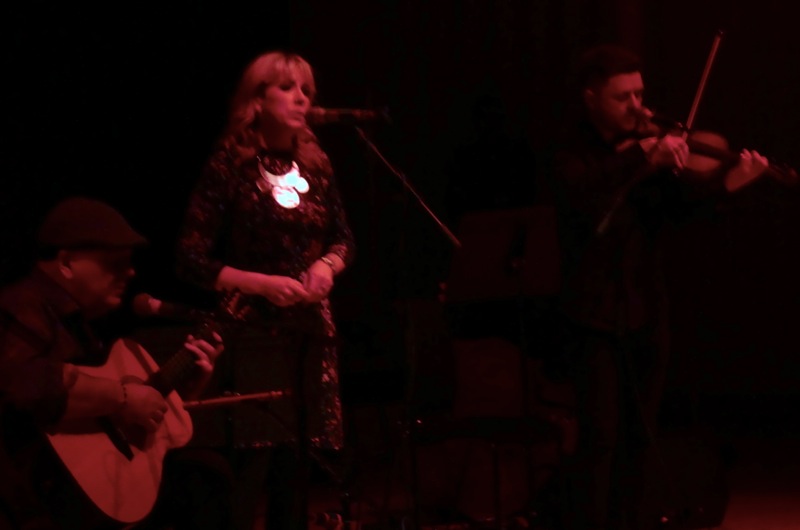
Photographs of Muireann Nic Amhlaoibh, The Irish Chamber Orchestra, and Donal O'Connor courtesy of the artists

-->Music Road is reader supported . Your support for Music Road is welcome and needed. If you are able to chip in, here is a way to do that, through PayPal. Note that you do not have to have a PayPal account to do this. Thank you.

Another way to support: you could Buy Me a Coffee at ko-fi.com

If you enjoy what you are reading here, check out my newsletter at Substack for more stories about music, the people who make it and the places which inspire it.

Labels: , , ,

Bookmark and Share
posted by Kerry Dexter at 0 Comments

Tuesday, July 11, 2023

Shorelines: Nuala Kennedy

The sea has been a constant in Nuala Kennedy’s life. She grew up and first began learning music in County Louth in Ireland’s east, not far from the Irish Sea. She has lived and traveled in other parts of the world with sea connections, from Scotland to Cape Breton to Spain to Australia and beyond.

In recent years Kennedy has been based near the coast of Clare, in the west of Ireland.

That sea connected life has presence in Kennedy’s album Shorelines.

The music on Shorelines tells stories of the sea, and draws on sea changes to tell human stories. So too the music, especially the songs, on Shorelines, offer stories of changes and of resilience in women’s lives.

As she was making those sea borne connections and choosing music for Shorelines, Kennedy was reflecting on her own life as woman, artist, wife, mother, and friend, and how changing circumstances require change. That had her considering the many ways resilience comes about in women’s lives That perspective too informs the music on Shorelines.

Shorelines is a title which reflects the shifts and changes in both coastal waters and the resilience of women. It is journey with a fine balance in tune and in song of original music and music drawn from traditional and contemporary sources.

Drawn from is one of the operative phrases, as Kennedy and the talented folk she’s invited along on this journey stay true to tradition while adding their own gifts to illuminate the stories they wish to tell.

Kennedy is a flute and whistle player, a singer, composer, and producer. Each of those aspects of her talent comes through clearly in Shorelines.

You will be well rewarded by following the path Kennedy has laid down through the nine tracks on the album, most of which are sets with tune and song in combination or comprising several tunes.

Several highlights:

The journey begins with the song Sally Sits Weeping, which finds a woman lamenting a false lover. Melody and variations of the verses have shown up in Ireland, Scotland, Australia, and North America; Kennedy has chosen a story which finds the woman weeping, true, but as the tale unfolds she “sets sails of silver” and heads in other directions.

On the recording this moves into Blue Devils’ Jig a lively original tune named for the melancholy Ishmael falls into in Moby Dick.

Saltwater and Flow are two lively original tunes which move gracefully into the song Cúcúín, sung in Irish. It’s a song Kennedy says that she often sings to her own young children, in which there’s a conversation between a mother cuckoo and her chicks. There’s another dimension, which aligns with aligns with the ideas that pull through the music on Shorelines. “In the Celtic tradition,” she points out, “cuckoos were considered to have toe ability to travel between worlds.”

Wake is an original tune “composed while meditating on the wake of a boat,” Kennedy writes. It is a reflective piece which points up her gentle power with the flute and the connections the musicians who join her bring as well, in this case especially Tara Breen on fiddle and Caoiminh Vallely on piano.

They move from Wake into a lively set called Sea Reels with original tunes inspired by Cape Breton bracketing a Scottish maritime reel, with Tony Byrne on guitar and Todd Sickafoose on double bass joining in.

Marguerite is a song which also references Atlantic Canada. Contemporary writer Scott Richardson drew on a true story from Newfoundland in 1542, which speaks of a woman facing circumstances which certainly tested her resilience.

Kennedy mentions that she first heard this song from Geraldine Hollett of the Newfoundland band The Once. That is how I first heard it as well. Kennedy brings her own gifts as a singer and storyteller to the tale, adding her own illumination to the powerful story. It also fits well with the intertwined themes of sea borne stories and ideas of resilience on Shorelines.

When you get to thinking about it, the story told in The Cavan Road leaves many things unexplained. It clearly has a happy ending though, which is why legendary flute player and singer Cathal McConnell taught it to Kennedy some years back when she asked for a song with just such an ending -- a rare thing in Irish love songs.

In addition to the musicians mentioned above, Moira Smiley and Muireann Nic Amhlaoibh, two artists whose work you’ve met here along the Music Road before, add subtle, interesting backing vocals to several of the songs.

There is more to explore, including a song suggested by Mick Moloney, an open ended version of a ‘died for love’ song, and tunes inspired by the coast of Clare.

Each of the tracks on Shorelines is worth your repeated listening. There’s more to discover each time in song, tune, and story, all offerd with top class musicianship.

You may also wish to see
Nuala Kennedy’s website, with details of her other recordings and her tour and teaching schedule
A short piece about one of Nuala’s earlier albums, The New Shoes
Learn about Day Is Come from The Alt, a trio in which Nuala joins up with John Doyle and Eamon O’Leary
Thar Toinn/Seaborne from Muireann Nic Amhlaoibh
Another one of those rare Irish love songs with happy ending, Carrick a Rede from Cathie Ryan and John Doyle
Learn a bit about the music of The Once, from Newfoundland

Photographs courtesy of the artist

-->Music Road is reader supported . Your support for Music Road is welcome and needed. If you are able to chip in, here is a way to do that, through PayPal. Note that you do not have to have a PayPal account to do this. Thank you.

You can also Buy Me a Coffee at ko-fi.com .

Labels: , , , , , ,

Bookmark and Share
posted by Kerry Dexter at 0 Comments

Wednesday, March 01, 2023

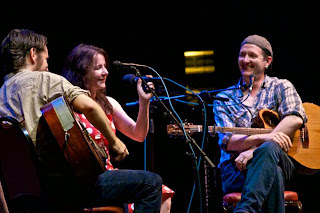
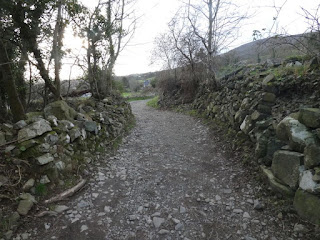
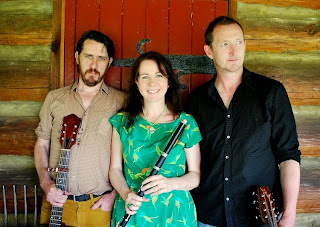
The long story: music across time

Music connects us to each other.

It can also be a way to connet across time and place.

These images may help you think about this. You may also want to listen to the music on
Thar Toinn/Seaborne from Muireann Nic Amhlaoibh
The Farthest Wave from Cathie Ryan
Alterum from Julie Fowlis
Dialogues from Su-a Lee
The Woods from Hamish Napier

It has been a bit quiet here of late; there will be more say about upcoming and current projects coming along.

In the meanwhile, have a look and listen to those stories and albums noted above, and take a look throught the archives here at Music Road too. A good lot of music and ideas to explore within.

Enjoy what you are finding at Music Road? You could Buy Me a Coffee at ko-fi.com Thank you!

Labels: , , , , , , , ,

Bookmark and Share
posted by Kerry Dexter at 0 Comments

Saturday, March 05, 2022

Ireland's music: Day Is Come from The Alt

Stories told through song: that is one thing the three musician who are the trio The Alt love and have in common.

They are great at telling stories through tunes -- music with no words-- as well.

As well they should be, as each of the three musicians -- John Doyle, Nuala Kennedy, and Eamon O’Leary -- have flourishing careers with other music projects. They also like the music and sound the create when they have the chance to get together. Hence, The Alt.

Day Is Come is their second recording together. On it, you will find a lively journey of song in both English and Irish, along with class tunes, some original and some drawn from traditional sources.

All three sing, and well know how to handle lead voice as well as support others. O’Leary plays bouzouki and harmonium on the recording, Doyle adds his own touch on bouzouki as well as playing guitar, mandola, keyboards, and bodhran, and Kennedy plays whistles and flutes. Guest fiddlers Marius Pibaret and Kevin Burke sit on several tracks.

Each of the ten tracks on the album is well worth repeated listening, as is the story as the artists have sequenced it. That said, several to listen out for especially include

Ta Na La/Day Is Come is an Irish language song, a cheerful drinking song at that. The trio offer it in a version known in Oriel, the ancient medieval area on the east coast of Ireland of which Nuala’s home town of Dundalk is part. As is fitting for that, Nuala’s light and lively voice leads the vocals after a short intro on the flute. The men join in on the choruses and their strings add sparkle to the vocals and join the flute for instrumental breaks framing the verses.

For the The Willow Tree, O’Leary takes lead voice. It’s a song in English by the scholar, singer, and songwriter Padraigin Ni Uallachain, whose music you have met here along the Music Road several times. It’s a reflective love song grounded in Irish landscape, which sounds as though it could have come from centuries back rather than being a contemporary piece. Harmonium and guitar weave a journey around O’Leary’s warm baritone and the graceful backing of Doyle’s tenor and Kennedy’s soprano. Kevin Burke joins on fiddle.

The Connaught Rangers has lyrics from a poem by Winifred M. Letts, set to music composed by John Doyle. The three musicians sing unaccompanied, with John’s strong tenor taking lead on lyrics which are a lament for those from Ireland who served in World War I. It is a fine way to hear just how good their harmonies are, and how well the three musicians work together.

You’ll do well to listen to each of the other tracks as well, which include a lively song in Irish which Nuala often sings to her young children, fine harmonies from Nuala and John backing Eamon’s lead on Paddy’s Land along with great playing from all three, two sets of tunes which mix originals from Kennedy and Doyle with tunes from the tradition, and a great version of the Child ballad Flower of Northumberland with Nuala on lead.

Day Is Come has no shortage of lively music, but through all that there’s a reflective, feeing, somewhat quieter in feeling than their first album. That John Doyle, Eamon O’Leary, and Nuala Kennedy created this outstanding collaboration during constraints on travel and connection is testament to their resilience and creativity as well as their musicianship.

Day Is Come is lasting music, with music to tap your feet or step along to,, to sing with, to enjoy quietly. Stories of Ireland well told in music indeed

You may also wish to see
Songs of the Scribe from Padraigin Ni Uallachain
The Path of Stones from John Doyle
The Alt, the trio’s first album, self titled
A bit about Nuala Kennedy’s album Behave the Bravest along with three other albums you may enjoy...

-->Music Road is reader supported . Your support for Music Road is welcome and needed. If you are able to chip in, here is a way to do that, through PayPal. Note that you do not have to have a PayPal account to do this. Thank you.

Another way to support: you could Buy Me a Coffee at ko-fi.com

If you enjoy what you are reading here, check out my newsletter at Substack for more stories about music, the people who make it and the places which inspire it.

Labels: , , , , , , , , , , ,

Bookmark and Share
posted by Kerry Dexter at 0 Comments

Sunday, September 27, 2020

Ireland's Music: Thar Toinn/ Seaborne from Muireann Nic Amhlaoibh

The sea, especially the sea in the west of Ireland, has always been part of Muireann Nic Amhlaoibh’s life. So has Gaelic. Music has, as well. It is natural, then then that she should bring these things together in her six song project Thar Toinn/Seaborne.

Nic Amhlaoibh plays flutes and whistles, and sings. Those are talents she often put to use in her thirteen years as lead singer with the top traditional band Danu, and in collaboration with other artists as well. She has traveled the world with her music. but it is to west Kerry, to the Dingle peninsula, that she returned to build her own career as a solo artist, and to raise her family.

For all that it is somewhat shorter than a full album, Nic Amhlaoibh makes the most of that concentrated form. There are stories told in Irish and in English, as well as one in Scottish Gaelic, with narratives drawn from truth, legend, and maybe a bit of both. The arrangements serve to enhance Nic Amhlaoibh’s choices in how she presents the lyrics. She has one of the best voices around, and that’s illuminated with a musical and poetic intelligence which makes her performances last well beyond first hearing. All that is present as part of what’s going on here.

One of Nic Amhloaibh’s gifts is saying much by saying little, in both story and style. That holds true whether she is telling a story of a faithless lover in Blackwaterside, venturing into Scottish Gaelic to sing a Cape Breton song of a woman whose sweetheart is lost on the sea, offering a west Kerry song wishing good luck and safe home to fisher folk, or telling a story of looking back at a well loved place in Ireland which may have been written by a man who survived the sinking of the Titanic.

Nic Amhlaoibh bookends these pieces with a song written by a friend who was both poet and boatman, and a song which may have come across the water from the singing of fairies.

The opener to Thar Toinn is Faoiseamh Faoistine, with words written by Danny Sheehy and music from Gerry O’Beirne. The song urges and encourages the listener to connect with land and sea. As Nic Amhlaoibh writes in her sleeve notes, Sheehy’s words also encourage listener to seek solace there.

Many years ago, a fisherman from the Blasket Islands heard the music of Port Na Bpucai one night while out on the sea. Perhaps it was wind, perhaps whale song, but then again, those fairies... it is after all a story fo a woman taken across the sea by fairies. It is also the song from which the title of the album comes.

For this arrangement of Port Na Bpucai Nic Amhlaoibh is joined by Billy Mag Fhlionn, who plays the Yaybahar, an acoustic instrument with which adds an otherworldly sound fitting for the song’s story. Mag Fhlionn built the Yaybahar himself after a concept by Gorkem Sen.

Others join in to support Nic Amhlaoibh through the album, too. Scottish singer Julie Fowlis adds her voice to the Cape Breton song,. Among others who sit in are Donal O’Connor, Gerry O’Beirne, Niamh Varian-Berry, and Donogh Hennessy.

It is, however, Muireann Nic Amhlaoibh’s voice, vision, and connection with the waters which center Thar Toinn/Seaborne. It is a gathering of songs which invite repeated listening to explore the many facets of that vision and connection.

You may also wish to see
Seeing Ireland: 3 Music videos
Foxglove and Fuschia, another album from Muireann Nic Amhlaoibh
About the album Buan from Danu
About the album Alterum from Julie Fowlis.

A way to support Music Road: you could Buy Me a Coffee at ko-fi.com

If you enjoy what you are reading here, check out my newsletter at Substack for more stories about music, the people who make it and the places which inspire it.

Labels: , , , , , , , , , , ,

Bookmark and Share
posted by Kerry Dexter at 0 Comments

Monday, May 25, 2020

Seeing Ireland: 3 music videos

Landscape and the love of it run deep in the heart of the music of Ireland. Whether you are dreaming of, remembering, or imaging a visit to the island of Ireland, here are three music videos that will help you see aspects of the place.

“This is what I believe that we bring to our audiences” says Mairead Ni Mhaonaigh. to her long time friend Moya Brennan, “that they can sense the beauty of this place.” The two are walking in Donegal where they both spent time growing up and where Mairead lives.

They go on share a memory and a song about the lights in the windows you see a at Christmas. Perhaps you are reading this at another time. It is a fine song nonetheless, good to enjoy at any season. As Ni Mhaonaigh and Brennan remark during their conversation, you are going to want to bring a heavy coat with you when you come to Donegal anyway...

You may find the song Soilse na Nollag/The Lights of Christmas, recorded on the Windham Hill collection called The Very Best of Celtic Christmas. You may find more of NI Mhaonaigh’s work on recordings by Altan, and of Brennan’s with Clannad.They each have solo albums out as well.

The Wild Atlantic Way has become the descriptive name for the many landscapes and places you will meet along the west coast of Ireland, all the way from KInsale in Cork to Malin Head in Donegal. There are six regions and, indeed all sorts of things to aexplore and all sorts of great music to hear as well.

Aoife Scott and Enda Reilly wrote the song All Along the Wild Atlantic Way, and with her partner and fellow musician Andy Meaney along for the journey Scott brings quite a bit of the place to life through this video as well as in the lyrics and melody.

You will find the song recorded on Scott’s debut album Carry the Day, and she has a second one out now as well, called Homebird.

There is much of the landscape of Ireland which lends itself to myth and legend, and many stories to go along. The stories may be true or may not, likely some of both in most cases. The song Port na bPúcaí/The Fairy Tune is one such. It comes from the Blasket Islands, which lie off the coast of west Kerry. Muireann Nic Amhlaoibh lives in the Dingle peninsula and across from the Blasket Islands.

The song, she says, was given her by her father, who told her the story that a Blasket Islands fisherman heard the music on the wind one night and played it on his fiddle. Some say it was a whale song, others that its origin was from the otherworld. The words are a story of a woman captured by the fairies. There is an otherworldly aspect to the landscape of the west Kerry shore where this video was filmed, and to the sound of the music, as well. Billy Mag Fhloinn constructed (after a concept of Gorkhem Sen) and plays the acoustic instrument called the yaybahar to compliment Nic Amhlaoibh’s singing. You will find the song on Muireann Nic Amhlaoibh’s recording Thar Toinn/Seaborne.

You may also wish to learn more about
Altan’s album The Gap of Dreams
Muireann Nic Amhlaoibh’s Foxglove & Fuschia
Another Irish musician who draws on landscape in her work to learn about
One of the most loved stories at Music Road: Irish music, Irish landscape

From the Music from Shifting Times series at Wandering Educators
Music for Connection and Contemplation, with music from Aoife Scott, Matt and Shannon Heaton, Cathie Ryan, and others

Photographs by Kerry Dexter, Thank you for respecting copyright.

-->Your support for Music Road is welcome and needed. If you are able to chip in
here is a way to do that, through PayPal. Note that you do not have to have a PayPal account to do this. Thank you for considering.

You can also Buy Me a Coffee at ko-fi.com

Labels: , , , , , , , , , ,

Bookmark and Share
posted by Kerry Dexter at 0 Comments

Thursday, February 13, 2020

Love Songs, Love Stories

Love is an eternal source of inspiration for artists. Here are five stories about romatic love you may not have heard, or may enjoy hearing again. The stories come with recognition that love holds its own challenges, of varied sorts.

The singer in Fear a Bhàta is waiting for her boatman to come home. That’s not an uncommon theme in songs from older times when, really, nobody knew if a loved one would return, for all sorts of reasons. In this song it is mot clear if th weather, the dangers of the work, or the possibility of change of heart are on the woman’s mind, but nonetheless, the longing is clear, even if Scottish Gaelic is not your language. Karen Matheson sings it here, with the band Capercaillie. You may find it recorded on their album The Blood is Strong. This video was recorded at a concert during the Celtic Connections Festival in Glasgow.

Tha mo Geal a Aird a Chuain/My Love is on the High Seas, is also a song of waiting for a man who works on the waters to return. This one has a bit of a more defined ending, though, which Julie Fowlis, who sings it here, talks about in the clip. The baby Julie is cradling in the story is a big girl now, but it is still a lovley way to see and ehar the song presented. You may find it on the album Mar a tha Mo Chride/ As My Heart Is.

There’s a swirl of hope, a challenging of invitation, a suggestion of strength, of passion, of the power of love in the face of heartbreak and danger; a lot going on in a few short minutes of the song What’s Closest to the Heart. Cathie Ryan sings it, and she also wrote the song. You may find it on her album The Farthest Wave.

At Valentine’s Day and beyond, may you.enjoy celebrating love through these songs.

If you'd like to chip in to support Music Road, your support and kindness are much needed and welcome
Here is a way to chip in, through PayPal. Note that you do not have to have a PayPal account to do this. Thank you.

You may also wish to explore
Capercaillie:At the Heart of It All
Cathie Ryan: Through Wind and Rain
Music for a New Year at Wandering Educators
Seven Ways to Explore Scotland through Music at Perceptive Travel

Labels: , , , , , , , , , , , , ,

Bookmark and Share
posted by Kerry Dexter at 1 Comments

Sunday, June 02, 2019

Ireland, Scotland, and Story: Allt from Julie Fowlis, Eamon Doorley, Zoe Conway, and John McIntyre

Music is story. Story told in word, stories held in melody and harmony, through voice, instrument, and language. Those are aspects of music that Julie Fowlis, Êamon Doorley, Zoe Conway, and John McIntyre investigate and respect in their recording Allt.

The stories they choose to explore for this recording come from the traditions of Ireland and Scotland. There are songs and tunes from history, alongside songs with words from contemporary and historic poetry for which the musicians have made new music, and new compositions of their own creation drawing on traditional style.

That may sound like quite a bit to pack into a cohesive whole on a recording of eleven tracks. It is, and if anyone is well qualified to take that on, it is these four.

Each of these musicians is well known for a particular aspect of their creative gifts. Those come into play here -- and they each go beyond those to share other aspects of their talents. Julie Fowlis is known as a lead singer; here she sings harmony and plays whistles as well. Êamon Doorley’s work on the bouzouki has marked him as one of the best on that instrument in the Celtic world. Here he sings and plays fiddle as well. Zoe Conway is well known and much in demand for her work on Irish fiddle and on classical violin; for this project her lead and harmony vocals and her skills on the whistles also come into play. John McIntyre, best known as a guitarist, steps up to sing here as well as adding in his piano skills.

As the recording opens, each takes it in turn to lead the music, and they each step in to support the others as the music progresses. Fowlis sings lead on Port Dannsaidh Hiortach the lively Saint Kilda Dance Song, which is paired with Deora Dé, a tune from Conway. You can hear Conway’s singing on Faoiseamh a Gheobhadsa, a gentle, searching ballad with words by Máirtín Ó Direáin whose title means I will Find Solace. McIntyre steps up for a song called An Ghaelige, which as its title might suggest is in praise of (and in part lament for) the language. This is followed by a set which sees two tunes by Doorley bookending one by Conway.

Those descriptions do not begin to do justice to the thoughtful, insightful way these stories are told through music, and the way the musicians support each other. Clearly these are artists who are deeply grounded in their own gifts and tradition, and well able to focus and listen to each other as the tunes unfold.

Add to that the way this project was recorded.

"Êamon and I were fresh from recording with Calum Malcolm,” Fowlis says “and I couldn’t see past working with him again!  I enjoyed working with him so much.  He is such an intuitive engineer and enjoys recording live, and in different settings.  As a quartet, we were keen to make this a live, honest and spontaneous recording.  And that’s what happened.  Calum set it up in such a way that we felt comfortable and inspired to play.  We used vintage mics, and recorded in the round. "

The project began from conversations between the two women.

Conway comes from and still lives in County Louth in Ireland. So does McIntyre. The two are married, as are Fowlis and Doorley, who come from Scotland and Ireland respectively, and make their home in the Highlands of Scotland.

Along with Irish musician Muireann Nic Amhlaoibh, Fowlis presents Port, a television series which traces connections among Celtic music and musicians. “Zoe and I worked together on one of the Port series on BBC ALBA.  She came to Ross Shire in the Highlands as a visiting artist, and it was then we really got chatting (and playing!) together,” Fowlis recalls. “Our paths had crossed before, on one of Bill Whelan’s performances in Belfast for example, but this was when we really got to know one another.  Sometimes you just really click with someone, and we both said that it would be great to do more together after that shoot.”

The pair stayed in touch and began discussing ideas. They liked the idea of writing new music together, and of honouring the languages and traditions of the landscapes they knew and loved. Support from Creative Louth, The Arts Council Of Ireland, and Iomairt Columcille allowed the four musicians time to research traditional and contemporary poetry they wanted to frame with new music, and to compose that music as well. “We searched out poetry to set music to, and ideas for tunes between us and started sending ideas back and forth,” Fowlis says. “We love the tradition but also the idea of adding to the store of songs and tunes and so we quickly settled on the idea of composing new music in a traditional style.”

There are fine lively pieces -- Dúirt Bean Liom in Irish paired with the tune Ríl Eóin and Na Hú Bhithinn paired with Hó Ró Na Priobaidean in Scottish Gaelic show the musicians’ joy in picking up the pace. A more reflective piece is Air an Somme, with words by Donald MacDonald.

There are instances of fine harmony work through many tracks on the project. This comes to the fore especially on the closing piece, An t-Earrach Thiar, a title which translates as spring in the west.

Bringing together tradition and inspiration, along with respect for language, history, and place: Julie Fowlis, Êamon Doorley, Zoe Conway and John McIntyre have created a lasting legacy with their work on Allt. "There are such beautiful poems out there, some hundreds of years old, some contemporary, and we felt really inspired to set these words to new music to bring them to life as songs, " Julie Fowlis says.

You may also wish to see
Julie Fowlis and Muireann Nic Amhloaoibh made an album exploring connections between songs in Scottish Gaelic and Irish called Dual.
Alterum from Julie Fowlis
Êamon Doorley is a member of the band Danu. Learn about their album Buan.

Photograph of Zoe Conway and John McIntyre and Julie Fowlis courtesy of the artists. Photograph of Eamon Doorleys by Kerry Dexter. Thank you for respecting copyright.

If you enjoy what you’ve been reading here, a way to support more of it: Buy Me a Coffee at ko-fi.com Thank you!

Labels: , , , , , , , , , , , , , , , , , ,

Bookmark and Share
posted by Kerry Dexter at 0 Comments

Sunday, June 10, 2018

Ireland's Music: Altan: The Gap of Dreams

The landscapes of Donegal suggest mystery and legend. There is connection and there is solitude. There is history and there is the moment as immediate as the blooming of a flower or the rise of a wave up on the shore.

The music of the band Altan holds all these as well. Their story as a band began in this far northwestern part of the island of Ireland. Though they have traveled the world with their music, it is to Donegal the band returned to record their album The Gap of Dreams. 

Their selection of song and tune draws in the many strands of life, landscape, and history. Édaín O’Donnell’s album sleeve art work helps set the stage for the music.

There are songs in both Irish and English, some recently written and some handed down in the tradition.

The tunes, too, come from varied sources, recent and traditional, learned from fellow musicians and written by members of the band. There’s as much story in the conversation among fiddle guitar, bouzouki, keyboard, and accordion in the tunes as there is in the word and melody of the songs. I

t is a story of landscape, life, love, and imagination. When she was growing up in Donegal, founding member of Altan Mairéad Ni Mhaonaigh recalled, she’d sometimes ask older players where they got a tune. I heard the fairies sing it, they would tell her. That became part of the idea behind the music choices and the title for The Gap of Dreams. 

Altan is Ni Mhaonaigh on fiddle and voice, Martin Tourish on piano accordion, Ciaran Curran on Bouzouki, Mark Kelly and Daithi Sproule on guitars and vocals, with Tommy McLaughlin sitting in on keyboards. For Gap of Dreams, Mairead’s daughter Nia Byrne and Mark’s son Sam Kelly each contribute an original tune to the recrding. They play on them on the album too, Nia on fiddle and Sam on concertina.  

With the title slip jig The Gap of Dreams composed by Mairéad, the tunes from Nia and Sam -- Nia’s Tune and The Beekeeper -- comprise the lively and engaging set which begins the album. 

Several of the tune sets pair music from the tradition with recently composed pieces. One such is Seán sa Cheo / Tuar / Oíche Fheidhmiúil (A Spirited Night), in which Seán sa Cheo (John in the Mist) comes from the tradition and Tuar and Oíche Fheidhmiúil are tunes accordion player Martin Tourish has written. 

Each of the tunes in The Tullaghan Lasses set -- the others are The Cameronian  and The Pigeon on the Gate-- come from the tradition, albeit in the different ways. The first is one often played by great Donegal fiddler John Doherty, which may be a very old tune he had learned from local sources. The Cameronian came over from Scotland -- trade, family, history, and geography  have made many connections between Donegal and Scotland. The Pigeon on the Gate is a tune which shows up in Celtic lands and has crossed the ocean to North America as well. It is a well known tune to Donegal traditional players. This set, in fact, is a fine example of Donegal style fiddle playing.

The gentle reel Port Alex, which Mark Kelly wrote for his nephew, draws in strands of quiet steadiness in journey, with no words spoken or sung.

Bacach Shíl Andaí is a gentle song, too, with words from a nursery rhyme well known in Donegal. The warmth of Mairéad’s voice in the song well suits that idea.

Several of the other songs Mairéad has chosen are a bit more dramatic. There is a lost and wandering lover pining for his lady through the landscape of Donegal’s northernmost place in Dark Inishowen. An Bealach Seo ‘Tá Romham (This Road Ahead of Me) moves with a sense of journey and hope, perhaps in the physical world and perhaps through that gap of dreams to the otherworld the journey of this album explores. Either way, Mairéad sings it and Altan plays it in service to the ideas of journey and connection. The song was written by Moya Brennan of Clannad along with her father Aodh Ó Dúgáin.

The song Altan have chosen to bring The Gap of Dreams to a close is a collaboration in a different way. Songwriter and scholar Pádraigín Ní Uallacháin who comes from the east coast of Ireland in the Oriel region, heard Shetland fiddler Tom Anderson’s tune Da Slockit Light. It inspired to write Fare Thee Well a Stór. The song is about love and leaving, and, in Altan’s playing with Mairéad’ singing, it suggests the landscapes of Donegal as well as those where the music originated.

That evocation of landscape through voice and instrument is woven through each of the tracks in The Gap of Dreams. Indeed that is one of the gifts Altan always brings to their listeners, a gift that, some thirty years from when they first began, the band members continue to give in creative and thoughtful ways.

You may also wish to see
Ireland’s music:Altan: The Widening Gyre
Scotland’s music: Julie Fowlis: Alterum
Ireland’s music: Aine MinogueIn the Name of Stillness  
Music of Ireland: Pádraigín Ní Uallacháin Songs of the Scribe

-->Your support for Music Road is welcome and needed. If you are able to chip in, here is a way to do that, through PayPal. Note that you do not have to have a PayPal account to do this. Thank you.

Another way to support: you could Buy Me a Coffee at ko-fi.com

If you enjoy what you are reading here, check out my newsletter at Substack for more stories about music, the people who make it, and the places which inspire it.

Labels: , , , , , , , , , ,

Bookmark and Share
posted by Kerry Dexter at 0 Comments

Wednesday, March 28, 2018

Ireland's Music: Murieann Nic Amhlaoibh: Foxglove & Fuschia

As she was planning the project which would become her album Foxglove & Fuschia, Muireann Nic Amhlaoibh decided she wanted the music to be a bit like what she might do if she were planning for a gig in a pub near her home in Corca Duibhne, the Dingle peninsula, in the west of Ireland. It’s a situation she knows well, as she grew up in Dingle, surrounded by music and going to sessions from a young age.

As ancient stones and worn paths through mountain and along coast attest, people have been calling the Dingle peninsula in the west of Ireland home for thousands upon thousands of years. Rain and mist and wind, mountain and sea meet in a landscapes that suggests and evokes history and story.

Those stories are often told, shared, and forged through music.

Muireann Nic Amhlaoibh has studied in Dublin, taught in LImerick, and traveled the world with her music. For thirteen years she was lead singer and flute player with the top Irish band Danu. I came time, though, to return to to her native west Kerry, to live again in the Irish speaking region of the far west of Dingle where she herself had grown up and begun her life in music,

She also thought at the time that stepping away from Danu might be the end of her public career as a musician. It wasn’t.

/>

A sure and steady vision of where she is and what she wishes to create as an artist is at the heart of Foxglove & Fuschia, which is Nic Amhlaoibh’s third solo album. There are songs in English and in Irish, and a few well chosen tune sets too.

Some of the music has its origin in west Kerry. Other songs and stories make their way in from father afield. They all, though, relate in some way to that life of water and mist, music and mountain and story found in Dingle.

There is the gentle joy of word and lyric in Muirisin Deas is Nora, a song from The Great Blasket Island, which lies just to the west of the tip of Dingle. It is about a couple who have been married a long time and are still very much in love. The words in Irish are from a traditional poem, set to a new melody by guitarist Gerry O’ Beirne. O’Beirne, who often plays with Nic Amhloaibh when she goes on the road with her music, supports her on the song for the recording.He also wrote the image filled song Where Foxglove, from which Nic Amhlaoibh drew the title for the recording.

For most pieces on Foxglove & Fuschia, there are just one two musicians joining Nic Amhlaoibh. That still leaves good scope for family and friends to sit in, though: there’s a set of reels with Nic Amhlaoibh’s husband Billy Mag Fhlionn on bouzouki and a friend from her days with Danu, Donnchadh Gough, on bodhran, and on a set of polkas with her father, Feargal MacAmhlaoibh, as the fiddler, and with longtime friends, Padraig O se on accordion and Donough Hennessey on guitars. Donal O’Connor, Seamus Begley, Pauline Sclanlon. Eilis Kennedy and John McSherry are among those who sit in on various tracks, too.

It is Nic Amhlaoibh’s voice and vision which define what’s happening on the album, though. Nowhere is that more evident than on The Final Trawl, a song of the sea by Scotland’s Archie Fisher. As part of her working co presenting the television programme Port for BBC Alba with Scottish singer Julie Fowlis, Nic Amhlaoibh had the chance to meet and sing with Fisher, who wrote the song with ideas and images drawn from his experience of seafaring.

Another song that weaves together the album’s ideas is Bean Dubh an Ghleanna. It is Nic Amhlaoibh says, one of the big songs which to her mind make up the classical tradition of Ireland’s folk music. Nic Amhlaoibh grew up in Dingle, in the Gaeltacht, where, she points out, you don’t actually study the traditional style of sean nos, you’re given the words and the melody and expected to find your own way into them.

Indeed, so she has, through each of the tracks on the recording. There are eleven of them, and each invites repeated listening. Tune, song, and story shared in ways which honor tradition and create it anew in one of Ireland’s most interesting and creative voices: this is what you will find on Foxglove & Fuschia.

Photographs of Muireann Nic Amhlaoibh and friends in concert at Celtic Connections in Glasgow, Scotland, by Kerry Dexter, made by permission of the artists, the festival, and the venue. Thank you for respecting copyright

You may also wish to see
Muireann Nic Amhlaoibh & Julie Fowlis: Dual
Musireann Nic Amhlaoibh: The Small Hours
Muireann Nic Amhlaoibh’s web site
Cathie Ryan: Through Wind & Rain

-->Your support for the work,here at Music Road is welcome and needed.
Here is one way to offer that, through PayPal. Note that you do not have to have a PayPal account to do this. Thank you.

Another way to support: you could Buy Me a Coffee at ko-fi.com

Labels: , , , , , , , , , , , , , ,

Bookmark and Share
posted by Kerry Dexter at 0 Comments

Saturday, September 10, 2016

Ireland's Music: Aoife Scott: Carry the Day

“It’s my love letter to the West,” says Aoife Scott of her song All Along with Wild Atlantic Way. That it is, with visits to places from Croagh Patrick to Dingle, framed in the happy memories of a woman long gone from the area. There’s a bit more to that imaginative story -- it’s a love story between husband and wife across time and place really -- but the lively melody and Scott’s fine voice will draw you in however much of the story you catch on to or not.

It makes an excellent choice with which to open Scott’s debut album Carry the Day, showcasing her songwriting ability along with the colors of her voice -- and the fact that she knows well how to use her gorgeous voice in service of a song and its story.

That’s equally true when she moves to the rather more serious tone of We Know Where We Stand, as with All along the Wild Atlantic Way a song she wrote with musical collaborator Enda Reilly. It’s a song appropriate for and as Scott writes in the liner notes, somewhat inspired by the marking of the the centenary of the Easter Rising. In just a shade more than three minutes Scott and Reilly call forth many aspects of that hundred years and beyond, with images both familiar and new. “We stand on the hill of Tara with our hurleys in our hands” -- there’s resonance in that image for anyone with a connection to Ireland.

Down by the Shelleybanks is a quiet gem, a reflective piece in celebration of an area near Dublin which Scott knows and loves well. It’s framed in specifics, yes, but will reach all who have found a place to go for quiet reflection and the healing aspects of the natural world.

These are the first three tracks of a dozen Scott offers on the recording. About half the songs are originals. One takes a song her brother Eoghan wrote as a rock song into a folk/country direction. There’s Slan Leat, an original in Irish which is sort of a goodbye but our paths will cross again idea, and a bit of Irish too in Fásaim, a song inspired by her brother’s wedding. Songs by Si Kahn, Adrian Lawlor, and Sharyn Dimmick continue Scott’s interest in story told through character. A standout among these is Briege Murphy’s The Hills of South Armagh with its thoughtful take on the emigrant experience.

Aoife Scott has a fine voice and a clear understanding of ways to use it to tell stories she creates and admires. Though this is her first recording as a solo artist, she is not new to the music business. She has toured with the band The Outside Track and has appeared with Cherish the Ladies, Altan, and the RTE Concert Orchestra among others.

Though Scott originally thought she’d have a career behind the scenes -- and did, working successfully in television production for several years -- eventually music won out.

One reason for that might be family background. Aoife is the daughter of renown singer Frances Black. Her aunt is international star Mary Black, and her uncles Shay, Michael, and Martin have all worked professionally in music. Her brother Eoghan is a guitarist and producer. Her cousins Danny O’Reilly of The Coronas and singer songwriter Roisin O are making own marks in the music business as well.

With Carry the Day Aoife Scott continues to stake out her own place as a creative singer and songwriter in the next generation of ever evolving Irish tradition, and in the next generation of her family legacy as well.

Photo of tree in Dingle by Trevor Rickard
Photo near Poolbeg Lighthouse, Dublin, by Doug Lee

You may also wish to see
Aoife Scott's website
Ireland's music: two voices: Mary Dillon and Frances Black
Music, time, memory: Mary Black
Michael Black: music, family, friends
Cathie Ryan: Through Wind and Rain

-->Your support for Music Road is welcome and needed. If you are able to chip in, here is a way to do that, through PayPal. Note that you do not have to have a PayPal account to do this. Thank you.

Labels: , , , , , , , , ,

Bookmark and Share
posted by Kerry Dexter at 0 Comments

Sunday, August 23, 2015

Ireland's Music: Altan: The Widening Gyre

There’s mystery, legend, and magic in the landscapes of Donegal, in Ireland’s far northwest. There you’ll also find deep community, lively humor, and strong connections to the past. Each of these things makes its way into the music of the band Altan.

For their album The Widening Gyre they chose to explore and express another sort of connection, too, the one that reaches across the ocean to the music of Appalachia and the American south. With this in mind, they traveled to Nashville, to the studios of Compass Records, to record.

The result is a clear and sparkling set of song and tune that interweaves these connected yet distinct ways of sharing and thinking about of music. The members of Altan -- Mairéad Ní Mhaonaigh on voice and fiddle, Ciaran Curran on bouzouki, Ciaran Tourish onfiddle, vocals, whistles and low whistle, Dáithí Sproule on guitar and voice, Mark Kelly on guitar and voice, and newest member Martin Tourish on accordion and keyboards -- explore these connections and travels of song in collaboration with longtime musical friends from the American folk scene, among them Bruce Molsky, Tim O’Brien, Garry West (who produced the recording), Natalie Haas, and Alison Brown. “We’ve made lifelong friends through music,” Mairéad says. “ The circle has expanded over the years, and our new album celebrates those relationships.”

The fourteen track disc opens with a set which sets the path for that, taking a journey through a lively tune from Scotland, a reel from the Irish tradition, and an original reel composed by Mairéad. Molsky and Ní Mhaonaigh turn Walt Aldrige’s old timey Americana song No Ash Will Burn into a vocal and instrumental collaboration that unlocks the Celtic nuances of the piece, and although it is a rather sad love song, also calls to mind the partings and stories of those who moved from one place to another in earlier times. Tune For Mairéad and Anna Ní Mhaonaigh is a slow air which was composed some years back by Dáithí Sproule for the birthdays of Mairéad and her sister Anna, and is done here in lovely spare fashion.

White Birds is a quiet piece too, one which evokes travels across land and sea in reality and imagination, with Mary Chapin Carpenter adding in her to voice to Mairéad’s for lyrics written by poet WB Yeats set to music by Fiona Black. Only right to have words by Yeats here; a different Yeats poem is the source the band turned to for the album’s title. “The title The Widening Gyre appeals to us and depicts the spiral of life, widening and embracing the new. It has an innate energy. We think that idea is reflected in the album’s music,” says Mairéad.

That energy is readily apparent in the Buffalo Gals/Leather Britches/Leslie’s Reel set, which evolved from the musicians siting around in the studio swapping tunes. It’s a fast paced event which holds the energy of Appalachian bluegrass along with fiery Donegal style music and creates its own place between. That also holds true of The Triple T, a tune which Ciaran Tourish wrote for his son Thomas and which invited in the talents of musical guests Jerry Douglas on Dobro, Sam Bush on mandolin, Darol Anger on fiddle, Bryan Sutton on guitar, Jim Higgins on bodhran, Stuart Duncan on fiddle, Bryan Sutton on guitar, and Alison Brown on banjo -- an all star jam in deed, and all these fine talents in collaboration in service to the tune.

Mairéad Ní Mhaonaigh’s distinctive soprano is as much a hallmark of Altan’s music as are her fiery fiddling and thoughtful compositions. All are in fine evidence here. She sourced the song Má Théann Tú ‘un Aonaigh, which offers advice (in irish) to a young man setting out in the world, from a field recording from the Arranmore Islands in northwest Donegal, while Cuirt Robin Finley/Moladh Shliabh Maoineach has as its substance a love song to a mountain in Donegal. She trades voices and stories with bluegrass/Americana master Tim O’Brien on The House Carpenter/ Gypsy Davy and her slow reel Samhradh and Aniar Aduaidh Jig pair naturally in a set with Martin Tourish’s The Donegal Jig. Far Beyond Carrickfinn is a song composed by Ian Smith and Enda Cullen to help give Mairéad perspective after the death of her father Francie, a himself a fine musician. It is a lasting piece that’s beautifully sung and presented here by Mairéad and Scotland’s Eddi Reader and could indeed apply to journeys of many sorts. “Stars lead the way, as your journey begins...”

There is much more to explore and enjoy. The mountains of Ireland’s northwest and the Americna south, seacoasts and hollows, journeys through them and stories told across time: all these come into play in Altan’s The Widening Gyre.

...and while you are at it, note the fine cover artwork by Édaín O’Donnell.

photographs courtesy of the band, Compass Records, and Colin Park and Joseph Mischyshyn. thank you for respecting copyright

You may also wish to see
The Wild Atlantic Way: Music of Donegal and Derry part of a 4 part series I’ve done for Wandering Educators
Music of Donegal: Altan: The Poison Glen/Gleann Nimhe
Music for the first week in Advent: candle in the window
Alison Brown: The Company You Keep
Tim O'Brien: The Crossing

-->Your support for Music Road is welcome and needed. If you are able to chip in, here is a way to do that, through PayPal. Note that you do not have to have a PayPal account to do this. Thank you.

Another way to support: you could Buy Me a Coffee at ko-fi.com

If you enjoy what you are reading here, check out my newsletter at Substack for more stories about music, the people who make it, and the places which inspire it.

Labels: , , , , , , , , ,

Bookmark and Share
posted by Kerry Dexter at 0 Comments